“Maintenance-free” and “requires significant upkeep” are both being used to describe the same solar panel systems — which should tell you neither one is quite right. The truth sits in the middle, and it’s a fairly narrow, predictable middle once you know what to look for over a system’s real lifespan.
Why “Completely Maintenance-Free” Overstates It Slightly
Solar panels have no moving parts and hold up well against decades of weather exposure — that part of the “low-maintenance” pitch is accurate. But “completely maintenance-free” rounds up a little too generously. There are specific, if infrequent, points over a system’s full lifespan where some attention is warranted, even if that attention rarely resembles active upkeep.
Panel Cleaning: Usually Less Necessary Than Assumed
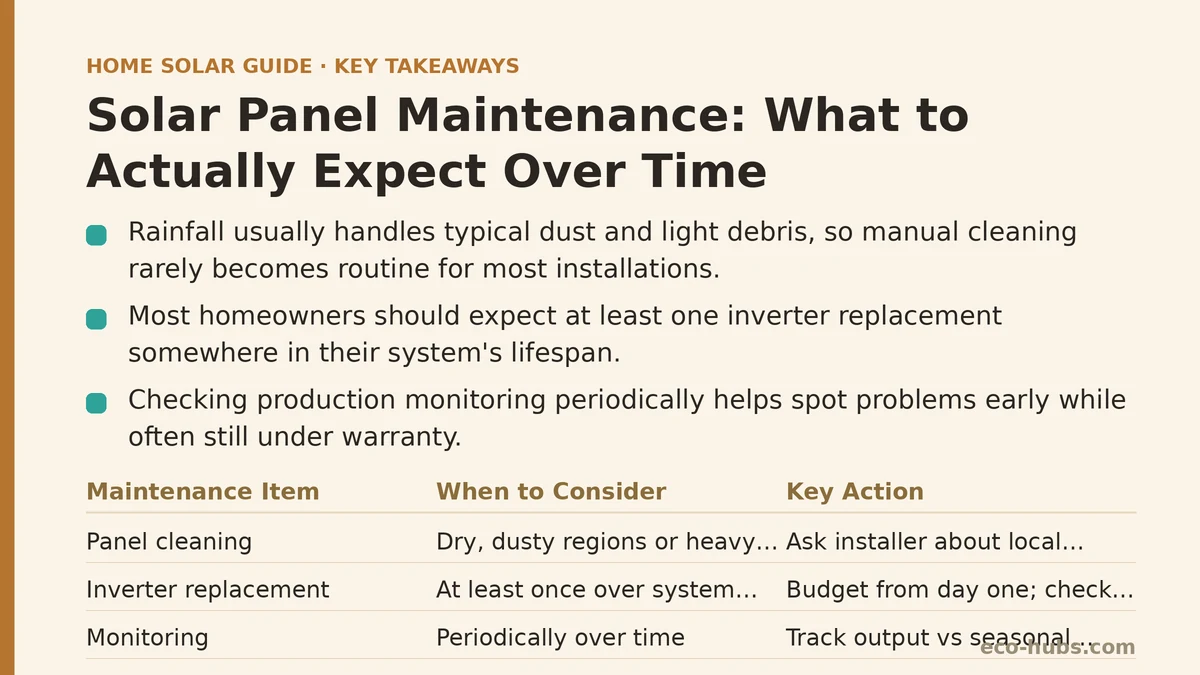
New solar owners often picture themselves out on the roof with a hose and squeegee on some kind of schedule. In practice, rainfall handles typical dust and light debris in most climates well enough that manual cleaning never becomes part of the routine for the majority of installations.
When cleaning might be worth considering: Dry, dusty regions with sparse rainfall are the exception, as are properties dealing with heavy pollen, frequent bird activity, or other buildup that outpaces what rain alone can clear. Ask your installer how your specific climate and site tend to behave rather than assuming the answer either way — it depends enough on local conditions that a blanket rule doesn’t really apply.
Inverter Replacement: A Genuine, Predictable Future Cost
Here’s the cost most owners should plan for. Inverters — the components that convert the DC electricity your panels produce into the AC electricity your home uses — typically wear out faster than the panels do. Most homeowners should expect at least one inverter replacement somewhere in their system’s lifespan. That’s a real, foreseeable expense, and it belongs in your budget from day one rather than showing up as a surprise years down the line.
Worth asking your installer directly: What’s the warranty length on the inverter you’re being quoted, and what would replacement realistically cost once that warranty expires? Factoring this specific, likely expense into your overall system math — instead of assuming zero costs after installation — gets you much closer to the true cost of ownership over the system’s full lifespan.
Monitoring for Performance Issues
Most current systems come with some form of production monitoring built in, so you can track how much electricity your system is actually generating over time. Checking that dashboard periodically and comparing output against seasonal expectations helps you spot problems early — a failing panel, debris buildup, or an inverter starting to slip before it fails outright. A slow decline in output isn’t always obvious day to day; it tends to show up only when you compare it against what that time of year should normally produce.
This barely counts as maintenance in the traditional sense — it’s an app check, not a task list — but it’s worth turning into a habit, since catching an issue early often means catching it while it’s still covered under warranty, rather than after that coverage has lapsed.
Tree Growth and Changing Shade Patterns Over Time
One thing that’s easy to miss: trees keep growing after your panels go up. Shade patterns that didn’t exist during your original site assessment can develop gradually over the following years. It’s worth revisiting this periodically, especially if you have trees positioned where growth could plausibly start affecting sun exposure on your roof — this kind of change tends to creep in slowly enough that it’s easy to overlook unless you’re specifically checking for it.
Roof-Related Considerations During the System’s Lifespan
As we cover in our dedicated roof assessment guide, if your roof needs repair or replacement at some point during your solar system’s operational life — a separate issue from the pre-installation roof check, since the roof keeps aging right alongside the panels — that typically means temporarily removing and reinstalling the panels. That’s a real added cost on top of the roofing work itself, and it’s worth keeping in the back of your mind over a multi-decade system lifespan, even if your roof looked solid at the time of installation.
A Quick Reference Summary
| Maintenance Consideration | Typical Frequency/Likelihood |
|---|---|
| Panel cleaning | Often unnecessary; situational based on climate |
| Inverter replacement | Reasonably likely at least once over system lifespan |
| Production monitoring | Ongoing, low-effort habit worth establishing |
| Reassessing shade from growing trees | Periodic, particularly relevant for properties with nearby trees |
| Roof work requiring panel removal | Possible over a multi-decade lifespan, depending on roof condition |
Where This Leaves the Maintenance Question
“Low-maintenance” is a fair label for the day-to-day experience of owning a solar system — you’re not out there doing regular upkeep. But budgeting for an eventual inverter replacement, and building the habit of checking production monitoring now and then, gives you a fuller and more honest picture than either “completely maintenance-free” or the more alarmist “significant ongoing upkeep” framing. Neither extreme quite matches the moderate reality of what owning a solar system actually involves over its multi-decade lifespan.
Related guides: Solar Panel Brands Compared: Tesla, SunPower, Panasonic, and More, Solar Panels and Homeowners Insurance: What You Need to Know, and Off-Grid Solar System Design: The Right Order of Decisions.
🔗 Recommended Reading
- Solar Panel Monitoring Apps: A Setup Guide for Beginners
- How to Read Your Electricity Bill After Solar: A Line-by-Line Walkthrough
- Solar Incentive Paperwork: Common Filing Mistakes That Delay Your Rebate
- Home Battery Sizing Mistakes That Lead to Blackout Regret
- Common Solar Installer Mistakes Homeowners Should Catch Before Signing