📖 5 min read
Solar panel installations are rapidly increasing, driven by the desire for clean energy and reduced electricity costs. However, many homeowners face a common challenge: shading. Trees, buildings, and even nearby structures can cast shadows on solar panels, significantly reducing their energy output. Traditional string inverters are particularly vulnerable to shading because the entire string's output is limited by the performance of the weakest panel. This is where microinverters come into play, offering a panel-level optimization that can dramatically improve energy yield in shaded conditions. Looking ahead to 2026, advancements in microinverter technology promise even greater efficiency and reliability, making them an increasingly attractive option for homeowners with shaded roofs. This article explores the top microinverter choices for maximizing solar energy production in such challenging environments.
1. Understanding Shading's Impact and Microinverter Advantages
Shading on solar panels causes a disproportionate drop in energy production. A single shaded cell can reduce the output of an entire panel, and in a string inverter system, this effect cascades across all panels connected in series. This is because string inverters treat the entire array as a single unit, and the weakest link dictates the overall performance. Even a small amount of shading can drastically diminish the system's power generation, making it less efficient and reducing the return on investment.
Microinverters, unlike string inverters, are installed at each individual solar panel. This means that each panel operates independently, maximizing its power output regardless of shading on other panels in the array. If one panel is shaded, it only affects that particular panel’s production, leaving the rest of the system operating at full capacity. This panel-level optimization is a significant advantage in shaded environments, ensuring that the solar system continues to generate as much power as possible, even with partial or intermittent shading.
The practical implications of using microinverters in shaded conditions are substantial. Homeowners with trees or nearby buildings casting shadows on their roofs can see a significant increase in energy production compared to using traditional string inverters. This translates into lower electricity bills, a faster return on investment, and a more reliable solar energy system. Furthermore, advancements in microinverter technology, such as improved efficiency, better heat management, and enhanced monitoring capabilities, are making them an even more compelling choice for both residential and commercial solar installations.
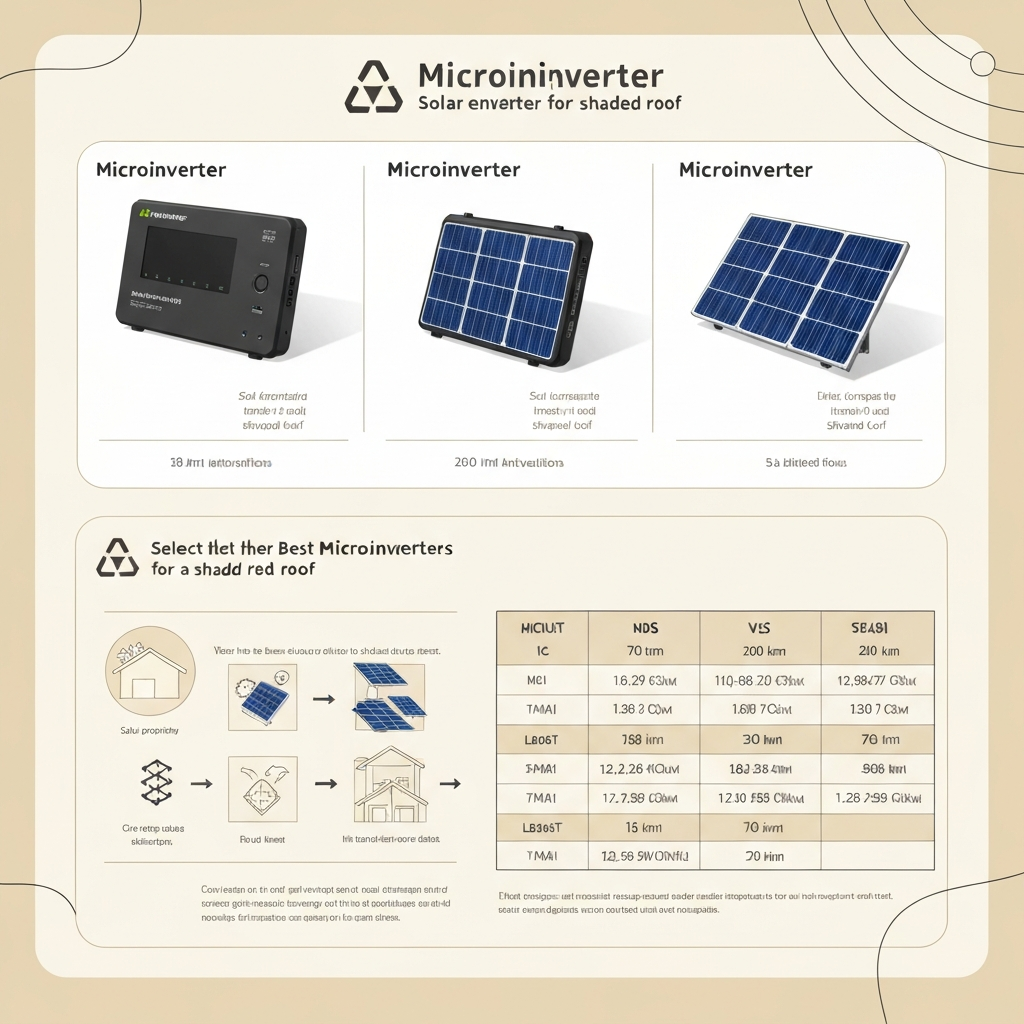
2. Top Microinverter Contenders for Shaded Roofs in 2026
Several microinverter manufacturers are leading the way in developing solutions optimized for shaded environments. These companies are constantly innovating, pushing the boundaries of efficiency, reliability, and cost-effectiveness. Evaluating these key players will give homeowners a clear understanding of the best options available in 2026 for maximizing solar energy production on shaded roofs.
- Enphase Energy: Enphase is a dominant player in the microinverter market, known for its high-quality products and advanced technology. Their microinverters are designed to maximize energy production, even in challenging conditions like shading. Enphase's latest generation microinverters feature enhanced efficiency, improved reliability, and advanced monitoring capabilities, allowing homeowners to track the performance of each individual panel in real-time. The company also offers comprehensive warranty options, providing peace of mind and ensuring long-term performance.
- APsystems: APsystems offers a range of microinverters that are particularly well-suited for shaded environments due to their dual-module and quad-module designs. These microinverters connect to two or four panels respectively, offering a cost-effective solution for optimizing energy production. APsystems' microinverters are known for their durability and robust performance, even in harsh weather conditions. They also feature integrated monitoring capabilities, allowing homeowners to track the performance of their solar system and identify any potential issues.
- SolarEdge: While SolarEdge is primarily known for its power optimizer technology, which works in conjunction with string inverters, their system also offers benefits in shaded conditions. SolarEdge's power optimizers are installed at each panel, similar to microinverters, and they maximize the energy output of each panel individually. This allows the string inverter to operate at its optimal efficiency, even if some panels are shaded. SolarEdge's system also features advanced monitoring capabilities, providing homeowners with detailed insights into their solar system's performance.
3. Optimizing Microinverter Performance in Shaded Conditions
Pro Tip: Regularly trim trees and vegetation around your solar panels to minimize shading and maximize energy production. Even small reductions in shading can lead to significant improvements in system performance.
While microinverters offer a significant advantage in shaded environments, there are additional steps homeowners can take to further optimize their performance. Careful planning and installation can help to minimize shading and ensure that the solar system operates at its peak efficiency. Regular maintenance, such as trimming trees and cleaning panels, can also help to maintain optimal performance over time.
Strategic panel placement is crucial for maximizing energy production in shaded conditions. By carefully analyzing the movement of the sun and identifying areas that receive the most sunlight throughout the day, installers can strategically position panels to minimize shading. Using advanced shading analysis tools can help to identify potential shading issues and optimize panel placement accordingly. Furthermore, selecting panels with high shade tolerance can also improve the system's performance in partially shaded environments. These panels are designed to maintain a higher percentage of their rated power output, even when partially shaded.
The value of optimizing microinverter performance in shaded conditions is substantial. By minimizing shading and ensuring that each panel operates at its optimal efficiency, homeowners can maximize their energy production, reduce their electricity bills, and accelerate their return on investment. Furthermore, a well-optimized solar system will operate more reliably and require less maintenance over time, providing long-term cost savings and peace of mind.
Conclusion
Microinverters represent a significant advancement in solar energy technology, particularly for homeowners with shaded roofs. By optimizing energy production at the panel level, microinverters mitigate the negative effects of shading and ensure that the solar system operates at its peak efficiency. The top microinverter contenders for 2026 offer a range of features and benefits, including enhanced efficiency, improved reliability, and advanced monitoring capabilities, empowering homeowners to maximize their solar energy production and reduce their electricity bills.
As technology continues to evolve, we can expect even greater advancements in microinverter performance and affordability. Future trends may include more sophisticated shading algorithms, improved heat management, and seamless integration with smart home energy management systems. For homeowners seeking to maximize their solar energy production in shaded environments, investing in high-quality microinverters is a smart and sustainable choice.
❓ Frequently Asked Questions (FAQ)
How do microinverters compare to string inverters in shaded conditions?
Microinverters offer a significant advantage over string inverters in shaded conditions. With string inverters, the entire string's output is limited by the performance of the weakest panel, meaning that even a small amount of shading can drastically reduce the overall energy production. Microinverters, on the other hand, operate independently at each panel, maximizing the energy output of each individual panel regardless of shading on other panels in the array. This panel-level optimization ensures that the solar system continues to generate as much power as possible, even with partial or intermittent shading, leading to a much higher overall energy yield compared to string inverters in shaded environments.
What are the key factors to consider when choosing microinverters for a shaded roof?
When selecting microinverters for a shaded roof, several key factors should be considered. Firstly, look for microinverters with high shade tolerance, meaning they maintain a higher percentage of their rated power output even when partially shaded. Secondly, consider the efficiency rating of the microinverter, as higher efficiency translates to more energy production. Thirdly, check the warranty offered by the manufacturer, ensuring that the microinverters are covered for a sufficient period. Finally, assess the monitoring capabilities of the microinverter system, as real-time panel-level monitoring allows you to track performance and identify any potential issues promptly.
Can I use microinverters in conjunction with power optimizers?
While microinverters and power optimizers both address the issue of shading in solar panel systems, they are typically used in different system configurations. Microinverters replace the traditional string inverter entirely, functioning as the inverter at each individual panel. Power optimizers, on the other hand, work in conjunction with a string inverter, optimizing the output of each panel before sending it to the central inverter. While it's technically possible to combine these technologies, it would likely be redundant and not cost-effective. Typically, you would choose either a microinverter system for panel-level DC-to-AC conversion or a power optimizer system for panel-level DC-to-DC optimization feeding into a central string inverter.
Tags: #Microinverters #SolarEnergy #ShadedRoofs #SolarPower #RenewableEnergy #SolarTech #EnergyEfficiency