📖 5 min read
Harnessing the power of the sun through solar panel installation is becoming increasingly popular as homeowners seek to reduce their carbon footprint and lower energy costs. Solar panels offer a sustainable and cost-effective way to generate electricity, but the installation process requires careful planning and execution. This comprehensive guide will walk you through each step, from assessing your energy needs to selecting the right equipment and understanding the installation process itself. Whether you're a seasoned DIY enthusiast or prefer to hire professionals, this guide will empower you with the knowledge to make informed decisions and ensure a successful solar panel installation. By understanding the nuances of solar panel technology and installation best practices, you can maximize your energy savings and contribute to a greener future. Let's dive in and unlock the potential of solar energy for your home.
1. Assessing Your Energy Needs and Site Suitability
Before diving into the technical aspects of solar panel installation, it's crucial to evaluate your current energy consumption. Review your past electricity bills to determine your average monthly energy usage in kilowatt-hours (kWh). This information will help you determine the size of the solar panel system needed to meet your energy demands. Remember to consider future energy needs, such as the addition of electric vehicles or other energy-intensive appliances.
Next, assess the suitability of your roof for solar panel installation. Factors like roof orientation, tilt angle, and shading significantly impact solar panel performance. South-facing roofs typically receive the most sunlight, while east- or west-facing roofs may experience reduced energy production. The ideal tilt angle depends on your latitude and local climate conditions; a solar professional can help you determine the optimal angle for your location. Additionally, identify any potential shading from trees, buildings, or other obstructions that could reduce sunlight exposure.
Finally, consider the structural integrity of your roof. Solar panels add weight to your roof, so it's essential to ensure that your roof can support the additional load. Consult with a qualified roofing contractor to assess the condition of your roof and make any necessary repairs or reinforcements before proceeding with the installation. Obtaining the proper permits and adhering to local building codes is also critical to ensure the safety and legality of your solar panel system.
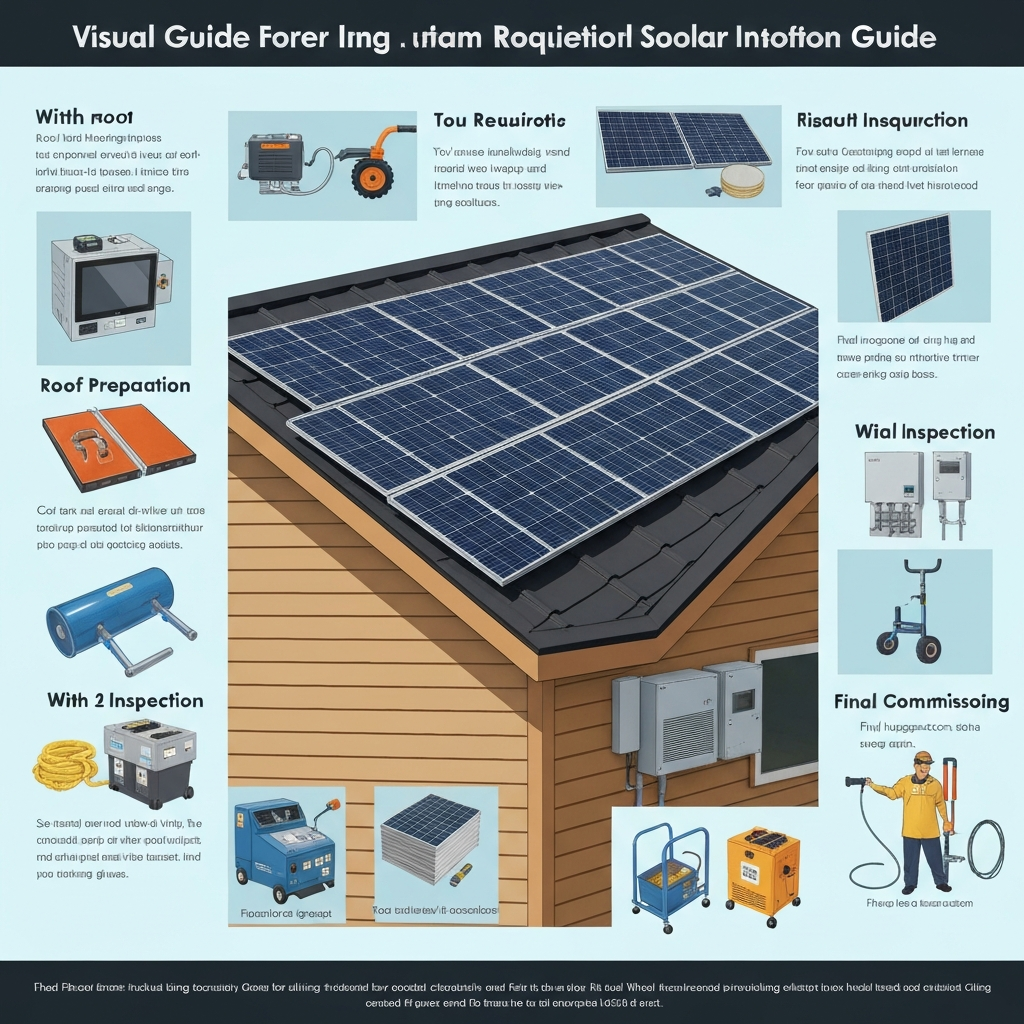
2. Selecting the Right Equipment and System Components
Choosing the right equipment is paramount to ensuring the efficiency and longevity of your solar panel system. The core components include solar panels, inverters, mounting hardware, and wiring. Each of these elements plays a crucial role in converting sunlight into usable electricity.
- Solar Panels: Consider the different types of solar panels available, such as monocrystalline, polycrystalline, and thin-film panels. Monocrystalline panels are known for their high efficiency and sleek appearance, making them a popular choice for residential installations. Polycrystalline panels are typically more affordable but slightly less efficient. Thin-film panels are flexible and lightweight but have lower efficiency compared to crystalline panels. Choose panels with a high power rating and a reputable warranty to ensure long-term performance and reliability.
- Inverters: Inverters convert the direct current (DC) electricity generated by solar panels into alternating current (AC) electricity, which is used to power your home. There are two main types of inverters: string inverters and microinverters. String inverters are cost-effective but can be affected by shading or panel mismatch. Microinverters, on the other hand, are installed on each individual panel, maximizing energy production and allowing for individual panel monitoring.
- Mounting Hardware: The mounting hardware secures the solar panels to your roof. Choose high-quality mounting hardware that is compatible with your roof type and designed to withstand local weather conditions, including wind and snow loads. Ensure that the mounting system is properly installed to prevent leaks and damage to your roof. Consider rail-based or rail-less mounting options depending on your aesthetic preferences and roof structure.
3. Understanding the Solar Panel Installation Process
Pro Tip: Always hire a licensed and experienced solar panel installer to ensure a safe and efficient installation. Verify their credentials and check for customer reviews before making a decision.
The solar panel installation process typically involves several key steps, starting with the preparation of your roof and the installation of mounting hardware. Installers will carefully measure and mark the locations for the mounting brackets, ensuring proper spacing and alignment. Once the brackets are secured, the rails are attached to provide a framework for the solar panels.
Next, the solar panels are carefully lifted onto the roof and attached to the mounting rails. Wiring connections are made to connect the panels in series or parallel, depending on the system design. The inverter is then installed, typically near the electrical panel, and connected to the solar panels and the grid. A licensed electrician will ensure that all electrical connections are made safely and in compliance with local codes.
Finally, the system is tested and commissioned to ensure that it is operating correctly. The installer will monitor the system's performance and make any necessary adjustments. They will also provide you with documentation and training on how to operate and maintain your solar panel system. Regular monitoring and maintenance can help you maximize your energy savings and extend the lifespan of your solar panels.
🔗 Recommended Reading
Conclusion
Installing solar panels is a significant investment in your home and the environment. By carefully assessing your energy needs, selecting the right equipment, and understanding the installation process, you can ensure a successful transition to clean, renewable energy. Whether you choose to DIY or hire professionals, the knowledge gained from this guide will empower you to make informed decisions and maximize the benefits of solar power.
As technology advances, solar panel systems are becoming more efficient and affordable. Coupled with increasing incentives and tax credits, now is an opportune time to explore solar energy. Embrace the future of energy and contribute to a sustainable planet by investing in solar panel installation for your home.
❓ Frequently Asked Questions (FAQ)
How long do solar panels typically last?
Most solar panels come with a 25-year performance warranty, guaranteeing that they will produce a certain percentage of their original power output after 25 years. However, solar panels can often continue to generate electricity well beyond their warranty period, with some systems lasting 30 years or more. The lifespan of solar panels depends on factors such as the quality of the panels, environmental conditions, and maintenance practices, making it a long-term investment for your home.
What are the main benefits of installing solar panels?
Installing solar panels offers a multitude of benefits, including reduced energy costs, increased home value, and a smaller carbon footprint. By generating your own electricity, you can significantly lower your monthly utility bills and protect yourself from rising energy prices. Solar panels can also increase the value of your home, making it more attractive to potential buyers. Furthermore, solar energy is a clean and renewable energy source, helping you reduce your reliance on fossil fuels and contribute to a more sustainable future, as solar panels allow you to produce your own energy independently.
How much does solar panel installation typically cost?
The cost of solar panel installation can vary depending on factors such as the size of the system, the type of equipment used, and the complexity of the installation. On average, a residential solar panel system can cost anywhere from $10,000 to $25,000 before incentives and tax credits. However, government incentives, such as the federal solar tax credit, can significantly reduce the upfront cost of the system. Additionally, many states and local utilities offer rebates and other incentives to encourage solar panel adoption, making solar a cost-effective and environment friendly choice for households.
Tags: #SolarPanel #InstallationGuide #RenewableEnergy #GreenEnergy #SolarPower #SustainableLiving #CleanEnergy