📖 5 min read
In the realm of project execution, the Project Management Plan (PMP) stands as a cornerstone, a meticulously crafted document that charts the course from initiation to successful completion. It's more than just a schedule; it's a comprehensive blueprint that integrates all aspects of a project, ensuring that everyone involved is aligned, informed, and working towards the same objectives. A well-defined PMP minimizes risks, optimizes resource allocation, and provides a benchmark against which project progress can be measured. Neglecting this vital document can lead to scope creep, budget overruns, and ultimately, project failure. Understanding the components of a project management plan and knowing how to develop one effectively is critical for any project manager and significantly enhances the likelihood of delivering successful outcomes. This guide will provide a project management plan example and discuss the essential details for planning.
1. Defining Project Objectives and Scope
The foundation of any successful Project Management Plan lies in clearly defining the project's objectives and scope. Project objectives outline what the project aims to achieve, while the scope defines the boundaries of the project, specifying what is included and excluded. A well-defined scope prevents scope creep, which is the uncontrolled expansion of the project's scope, and ensures that the project stays on track.
For example, imagine a project to develop a new mobile application. The objective might be to create a user-friendly app that increases customer engagement by 20% within six months of launch. The scope would then detail the app's features, target platforms (iOS and Android), and any integrations with existing systems. Conversely, it would explicitly exclude features not initially planned, such as a web version of the application or integration with third-party services outside the original scope. Clearly defining these parameters sets expectations and manages stakeholders' assumptions.
The implications of a poorly defined scope are significant. Without clear boundaries, the project can easily expand beyond its initial budget and timeline, leading to frustration and potential failure. Regularly reviewing and validating the scope with stakeholders throughout the project lifecycle is crucial to ensure everyone remains aligned and that any necessary changes are managed effectively through a formal change control process.
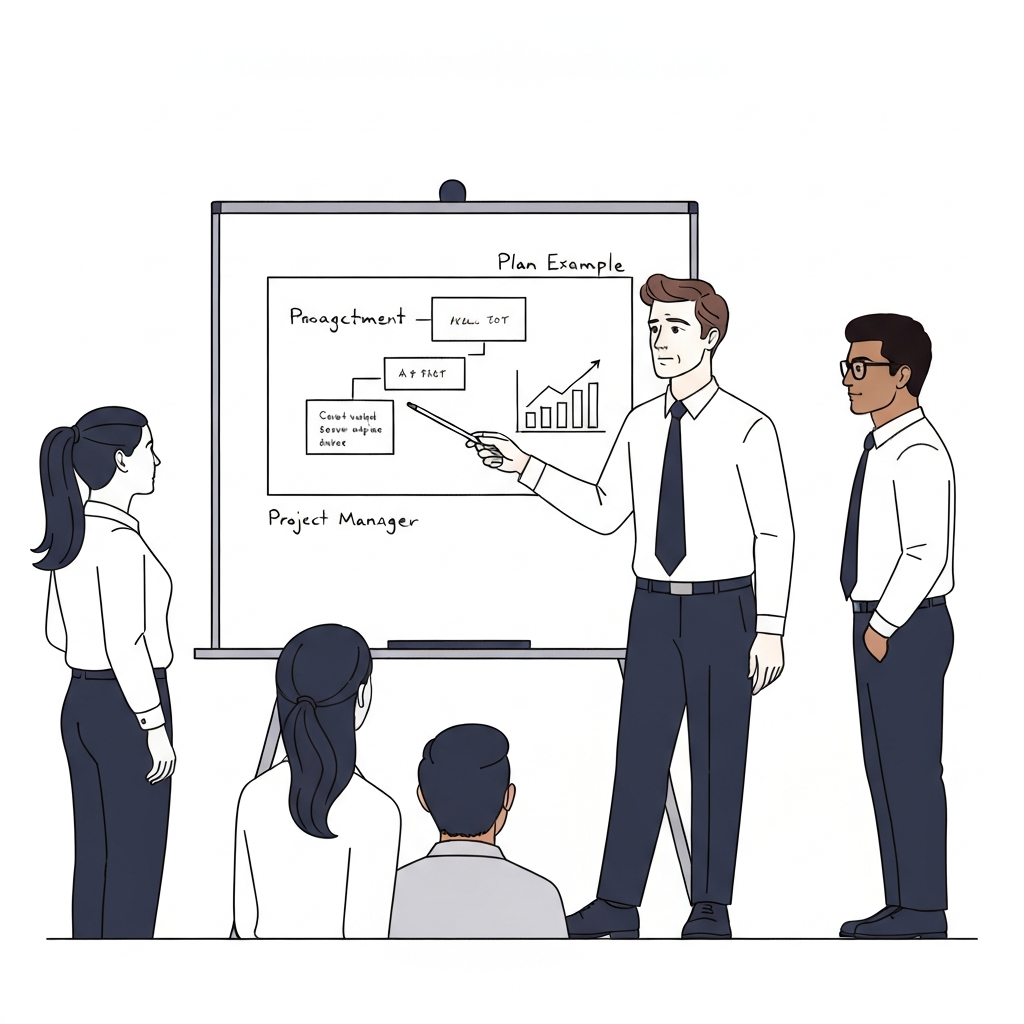
2. Key Components of a Project Management Plan Example
A comprehensive Project Management Plan consists of several key components, each playing a vital role in guiding the project to success. These components work together to provide a holistic view of the project, covering everything from budget and timeline to risk management and communication strategies. Let's explore some essential elements:
- Scope Statement: A detailed description of the project's objectives, deliverables, and boundaries. It serves as a reference point throughout the project to ensure that all work aligns with the defined scope. The scope statement should include acceptance criteria that specify how the deliverables will be evaluated and approved. A good scope statement clearly defines what success looks like for the project.
- Work Breakdown Structure (WBS): A hierarchical decomposition of the project's deliverables into smaller, more manageable tasks. The WBS provides a visual representation of the project's scope and helps in estimating the time, cost, and resources required for each task. It ensures that no aspect of the project is overlooked and facilitates efficient task assignment and tracking. A practical example involves breaking down the development of a software application into modules, features, and sub-tasks, each with assigned responsibilities and timelines.
- Project Schedule: A timeline that outlines the start and end dates of each task and milestone, along with dependencies and critical path analysis. The schedule helps in monitoring project progress, identifying potential delays, and allocating resources effectively. Tools like Gantt charts are commonly used to visualize the project schedule and track progress against the plan. A realistic schedule should account for potential risks and incorporate contingency buffers to mitigate unforeseen delays.
3. Risk Management and Communication
Pro Tip: Regularly update your risk register. Risks evolve, and new ones can emerge throughout the project lifecycle. Keeping the register current ensures you're prepared to address potential issues proactively.
Effective risk management and communication are crucial for project success. Risk management involves identifying potential risks, assessing their impact and probability, and developing mitigation strategies to minimize their effects. Communication ensures that all stakeholders are informed about the project's progress, risks, and any changes that may occur.
A comprehensive risk management plan includes a risk register, which documents all identified risks, their potential impact, and the planned response. For example, in a construction project, a potential risk might be adverse weather conditions that could delay the project. The mitigation strategy could involve scheduling critical tasks during favorable weather seasons and having contingency plans in place to address potential delays. Regular risk assessments and updates are essential to keep the risk management plan relevant and effective.
Communication planning defines how information will be disseminated to stakeholders, including the frequency, format, and channels of communication. This plan should address who needs to be informed, what information they need, and how often they need it. For instance, weekly progress reports, monthly stakeholder meetings, and ad-hoc notifications for critical issues are common communication methods. Clear and consistent communication builds trust and ensures that everyone is aware of the project's status and any challenges that may arise.
🔗 Recommended Reading
- Innovative Materials and Technologies for Building Integrated Photovoltaics Enhancing Energy Efficiency and Aesthetics in Modern Architecture
- Reducing Microplastic Pollution in Laundry and Textiles - A Guide to Sustainable Fabric Choices and Washing Machine Filters for a Minimal Waste Lifestyle
- Renewable Energy Policy Impact on Local Economies - A Study of Job Creation and Community Development in Regions with High Solar Adoption Rates
- Implementing a Circular Economy in Your Community - A Guide to Collaborative Waste Reduction and Sustainable Neighborhood Initiatives
- Embracing the 80/20 Rule in Minimalist Living- Strategies for Optimizing Your Home and Lifestyle for Maximum Sustainability and Zero Waste