📖 7 min read
Harnessing solar energy is becoming increasingly popular for homeowners seeking to reduce their carbon footprint and lower electricity bills. At the heart of every solar panel are solar cells, and the type of cell used significantly affects the panel's efficiency, lifespan, and overall performance. Two dominant types of silicon solar cells are N-type and P-type, each with its unique characteristics and advantages. Understanding these differences is crucial for making informed decisions when investing in a solar energy system for your home. This comprehensive guide will delve into the intricacies of N-type and P-type solar cells, exploring their construction, performance, degradation patterns, and suitability for residential applications, empowering you to optimize your home's energy efficiency.
1. Understanding P-Type Solar Cells
P-type solar cells have been the industry standard for decades, largely due to their well-established manufacturing processes and lower production costs. These cells are made from silicon wafers doped with boron, which creates an abundance of positive charge carriers, hence the "P" designation. The presence of boron allows the silicon to more readily accept electrons, forming the basis for photovoltaic conversion. This established technology has benefited from significant research and development, resulting in relatively high efficiency levels at a competitive price point.
The performance of P-type solar cells is affected by a phenomenon known as Light-Induced Degradation (LID). This occurs when the cells are exposed to sunlight for the first time, causing a decrease in efficiency. The LID effect is attributed to the formation of boron-oxygen complexes within the silicon material. For instance, a typical P-type cell might experience a 1-3% drop in power output during the initial hours of sunlight exposure. While manufacturers have implemented techniques to mitigate LID, it remains a factor to consider when evaluating the long-term performance of P-type panels.
Despite LID, P-type solar panels are still a viable option for many homeowners, particularly those on a budget. Their lower upfront cost makes them an attractive choice, and improvements in manufacturing techniques have reduced the severity of LID over the years. The readily available supply and established track record of P-type panels also provide a sense of reliability for consumers. Ultimately, the decision to choose P-type depends on balancing the initial cost savings with the potential for slightly lower long-term performance compared to newer technologies.
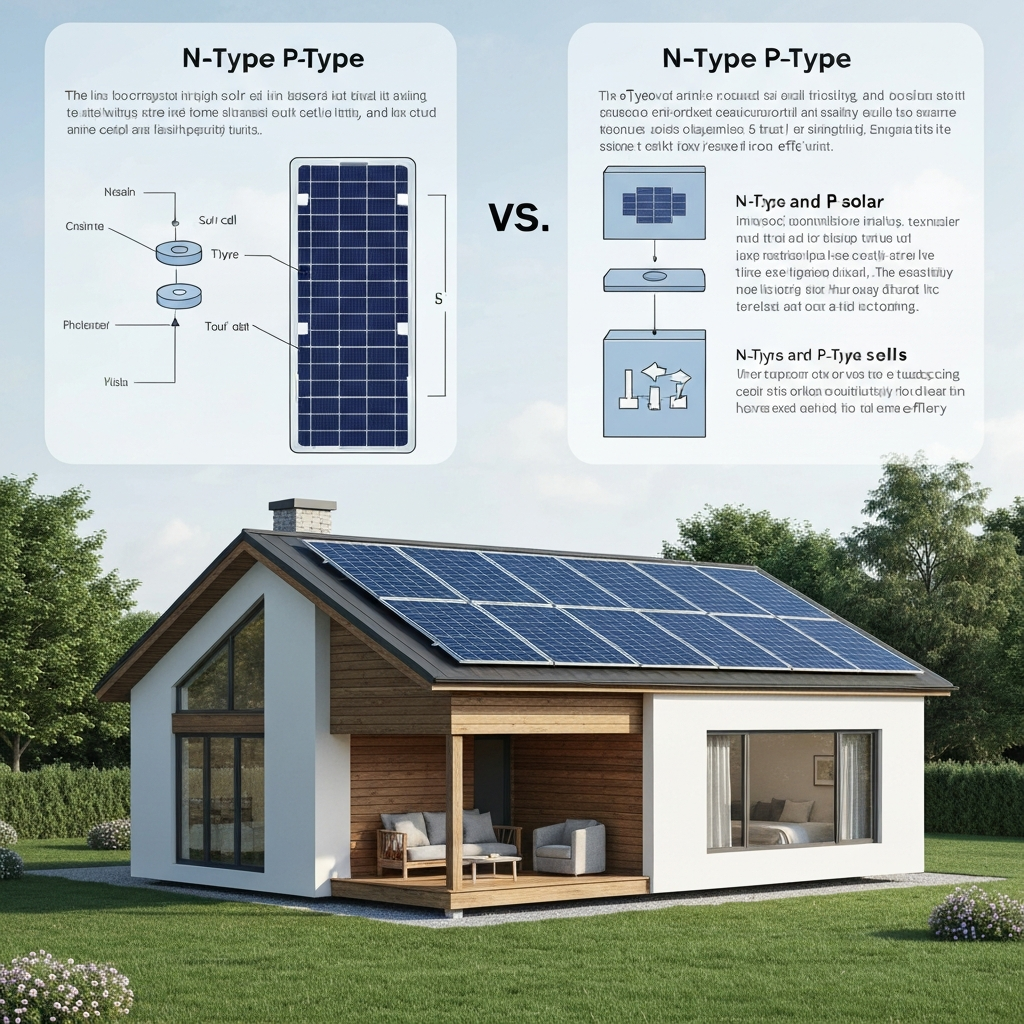
2. Exploring N-Type Solar Cells
N-type solar cells represent a more recent advancement in solar technology, offering several advantages over their P-type counterparts. These cells are made from silicon wafers doped with phosphorus, which creates an abundance of negative charge carriers (electrons), hence the "N" designation. This fundamental difference in doping results in improved performance characteristics, particularly in terms of efficiency and degradation.
- Reduced Light-Induced Degradation (LID): N-type cells exhibit significantly less LID compared to P-type cells. Because they are doped with phosphorus instead of boron, the formation of performance-degrading boron-oxygen complexes is avoided. This translates to a more stable power output over the lifespan of the panel, ensuring long-term energy production and savings.
- Higher Efficiency: N-type solar cells generally boast higher conversion efficiencies than P-type cells. The absence of boron-oxygen complexes allows for better electron flow and less energy loss within the cell. This increased efficiency means that N-type panels can generate more power from the same surface area, making them ideal for homes with limited roof space.
- Improved Temperature Coefficient: The temperature coefficient of a solar panel indicates how its performance is affected by temperature changes. N-type solar cells typically have a better (lower) temperature coefficient than P-type cells. This means they experience less power loss at higher temperatures, which is a significant advantage in hot climates. In real-world conditions, this can translate to a noticeable difference in energy yield, especially during peak summer months.
3. N-Type vs. P-Type: A Deeper Dive into Home Efficiency
Pro Tip: When evaluating solar panel options, carefully review the manufacturer's warranty and degradation specifications. These documents provide valuable insights into the panel's expected performance over its lifetime and can help you compare different technologies more effectively.
The choice between N-type and P-type solar cells has a direct impact on your home's energy efficiency and overall return on investment. N-type panels, with their higher efficiency and lower degradation rates, can generate more electricity over their lifespan compared to P-type panels of the same size. This means you can potentially install fewer panels to meet your energy needs, saving on upfront costs and installation expenses.
Furthermore, the superior temperature coefficient of N-type panels ensures consistent performance even on hot days, which is particularly beneficial for homeowners in warmer regions. This sustained efficiency translates to higher energy production during peak demand periods, reducing your reliance on grid electricity and maximizing your savings. While N-type panels typically have a higher initial cost, their long-term performance advantages often outweigh the price difference, leading to a better overall return on investment.
Ultimately, the decision hinges on your specific energy needs, budget constraints, and long-term goals. If you prioritize maximizing energy production and minimizing long-term degradation, N-type panels are likely the superior choice. However, if you are primarily concerned with minimizing upfront costs and have ample roof space, P-type panels can still be a viable option. Carefully weigh the pros and cons of each technology to determine which best aligns with your individual circumstances and energy efficiency goals.
Conclusion
In conclusion, both N-type and P-type solar cells offer distinct advantages and disadvantages for homeowners considering solar energy. P-type cells, with their established manufacturing processes and lower costs, provide a budget-friendly entry point into solar energy. However, N-type cells, with their superior efficiency, lower degradation rates, and improved temperature coefficients, offer a compelling alternative for those seeking maximum energy production and long-term savings, enhancing overall home efficiency.
The solar industry is continuously evolving, with ongoing research and development focused on further improving the performance and affordability of both N-type and P-type technologies. As manufacturing processes become more refined and economies of scale are achieved, the price gap between the two types is expected to narrow, making N-type panels increasingly accessible to a wider range of homeowners. Staying informed about these advancements will empower you to make the best decision for your home and your energy future.
❓ Frequently Asked Questions (FAQ)
What is the typical lifespan of N-type and P-type solar panels?
Both N-type and P-type solar panels are designed to last for 25-30 years, but their performance degradation rates can differ. N-type panels typically degrade at a slower rate, often maintaining a higher percentage of their initial power output over the long term. P-type panels, while still durable, may experience slightly more degradation due to factors like Light-Induced Degradation (LID). Always review the manufacturer's warranty for specific degradation guarantees.
Are N-type solar panels worth the extra cost for residential installations?
The value proposition of N-type panels depends on individual circumstances. If you have limited roof space and need to maximize energy production, or if you live in a hot climate where temperature-related power loss is a concern, N-type panels are often worth the premium. Their higher efficiency and lower degradation rates can lead to greater long-term savings and a quicker return on investment. However, if your primary concern is minimizing upfront costs and you have ample roof space, P-type panels may be a more suitable option.
How do environmental factors affect the performance of N-type and P-type solar panels?
Environmental factors such as temperature, shading, and snow accumulation can affect the performance of both N-type and P-type solar panels. Higher temperatures generally reduce the efficiency of all solar panels, but N-type panels tend to perform better in hot conditions due to their lower temperature coefficient. Shading can significantly reduce power output, regardless of the cell type, so proper panel placement is crucial. Snow accumulation can also block sunlight, reducing energy production, but the angle of the panels and the local climate will influence the extent of this impact.
Tags: #SolarEnergy #NTypeSolar #PTypeSolar #HomeEfficiency #RenewableEnergy #SolarPanels #SustainableLiving