📖 5 min read
The transition to electric vehicles (EVs) is revolutionizing transportation, offering a cleaner and more sustainable alternative to traditional gasoline-powered cars. However, a common concern among potential and current EV owners is battery degradation. Understanding the factors that contribute to battery degradation and implementing effective mitigation strategies is essential for maximizing the lifespan and performance of your EV battery. This guide will explore the primary causes of EV battery degradation and provide practical tips for preserving your battery's health, considering factors such as charging habits, temperature management, and the integration of residential solar panels for sustainable charging solutions. We will delve into the science behind battery chemistry and offer actionable strategies you can implement today to extend the life of your EV battery.
1. Understanding EV Battery Degradation
EV battery degradation refers to the gradual loss of battery capacity over time, resulting in a reduced driving range and overall performance. This phenomenon is a natural consequence of the electrochemical reactions occurring within the battery cells during charging and discharging cycles. While all batteries degrade eventually, the rate and extent of degradation can be significantly influenced by various factors, including usage patterns, environmental conditions, and charging habits. By understanding these factors, EV owners can take proactive steps to minimize degradation and maintain optimal battery health.
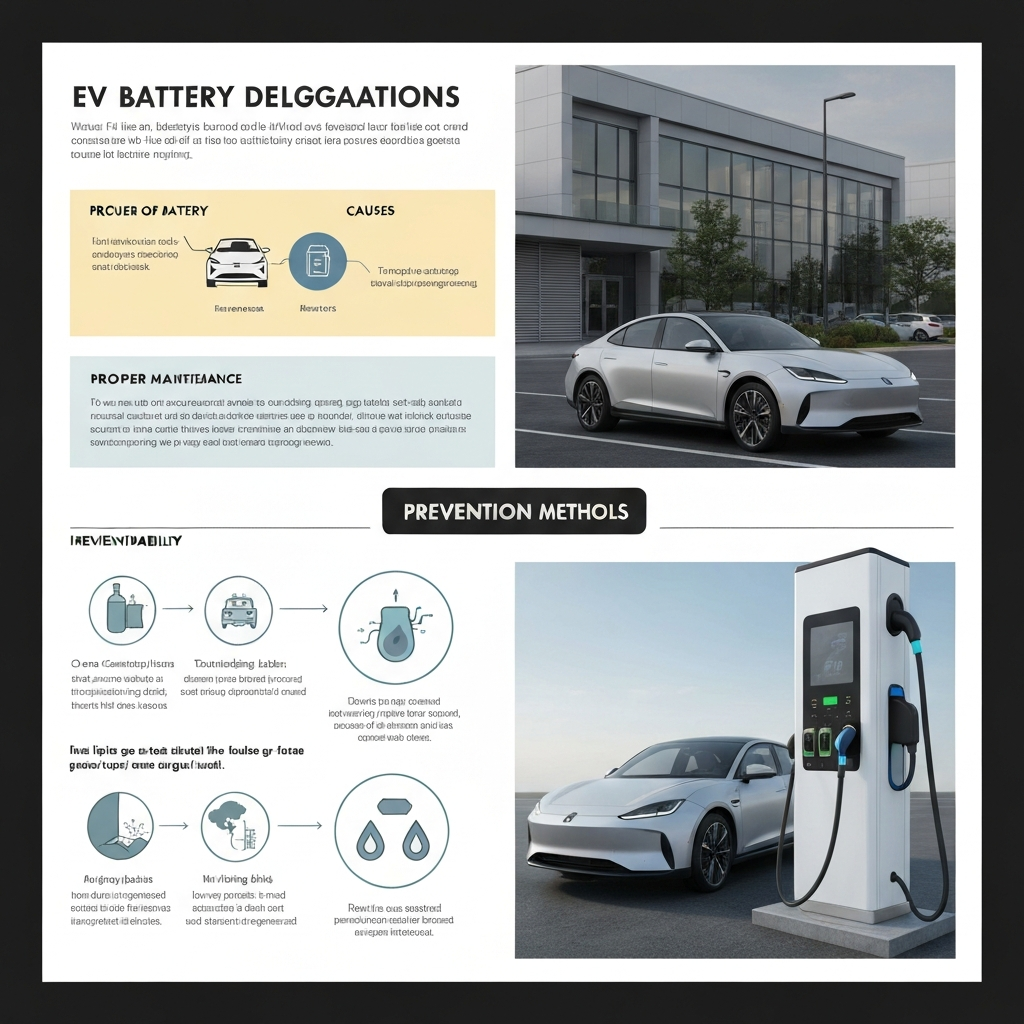
The primary causes of EV battery degradation can be broadly categorized into three main areas: calendar aging, cycle aging, and environmental factors. Calendar aging refers to the degradation that occurs simply due to the passage of time, regardless of usage. Cycle aging, on the other hand, is related to the number of charge and discharge cycles the battery undergoes. Environmental factors, such as temperature extremes, can also accelerate the degradation process. For example, consistently exposing your EV to high temperatures can lead to faster capacity loss. Data shows that batteries stored at 25°C (77°F) degrade much slower than those stored at 45°C (113°F).
The practical implications of EV battery degradation are significant. A degraded battery not only reduces the available driving range but can also impact the resale value of the vehicle. Moreover, replacing an EV battery can be a costly undertaking, making it crucial to implement strategies to minimize degradation and extend the battery's lifespan. By adopting best practices for charging, temperature management, and overall vehicle maintenance, EV owners can significantly reduce the rate of battery degradation and enjoy the full benefits of electric vehicle ownership for years to come.
2. Mitigation Strategies for EV Battery Degradation
Several effective strategies can be employed to mitigate EV battery degradation and prolong the lifespan of your battery. These strategies focus on optimizing charging habits, managing temperature, and implementing proactive maintenance practices. By integrating these techniques into your daily routine, you can significantly reduce the rate of battery degradation and maintain optimal performance.
- Optimizing Charging Habits: Avoid consistently charging your EV battery to 100% or depleting it to 0%. It is generally recommended to keep the battery charge level between 20% and 80% for daily use. This practice reduces stress on the battery cells and minimizes degradation. Utilize the EV's charging management system to set charging limits. Fast charging (DC fast charging) should be used sparingly as it generates more heat, which can accelerate battery degradation. Regularly using Level 2 charging at home is a gentler and more sustainable option.
- Managing Temperature: Extreme temperatures, both hot and cold, can negatively impact EV battery health. Park your EV in a shaded area or garage during hot weather to prevent overheating. In cold weather, pre-conditioning the battery before driving can help warm it up and improve efficiency. Many EVs have built-in thermal management systems to regulate battery temperature, but taking additional precautions can further protect the battery. Consider using a garage heater in extremely cold climates to maintain a more stable temperature for the battery.
- Proactive Maintenance: Regularly check the battery's state of health using the EV's onboard diagnostics or a third-party battery monitoring app. Monitor the battery's performance and driving range to detect any early signs of degradation. Follow the manufacturer's recommended maintenance schedule to ensure optimal performance of the battery and related systems. Address any issues promptly to prevent further degradation. Keeping your EV's software updated is also crucial as manufacturers often release updates that improve battery management and efficiency.
3. Integrating Residential Solar Panels for Sustainable Charging
Leverage residential solar panels to create a sustainable and cost-effective charging solution for your EV, reducing your reliance on the grid and minimizing your carbon footprint.
Integrating residential solar panels with your EV charging setup offers a compelling solution for sustainable and cost-effective transportation. By generating your own electricity from the sun, you can significantly reduce your reliance on the grid and minimize your carbon footprint. This combination not only lowers your energy bills but also provides a clean and renewable energy source for charging your EV.
To effectively integrate solar panels with your EV charging system, several factors need to be considered. First, determine the size of the solar panel system required to meet your EV charging needs and overall household energy consumption. A professional solar installer can assess your energy usage and recommend the appropriate system size. Second, install a smart EV charger that can communicate with your solar panel system. This allows the charger to prioritize charging your EV with solar energy when available and automatically switch to grid power when solar production is insufficient. You can also integrate a home battery storage system to store excess solar energy generated during the day for use at night or during periods of low solar production.
The value of combining residential solar panels and EV charging extends beyond environmental benefits. The financial savings from reduced electricity bills can be substantial over time, and government incentives and tax credits can further offset the initial investment in solar panels and EV chargers. Furthermore, using solar energy to charge your EV can increase its lifespan by reducing the strain on the grid and providing a more stable and consistent power source. Consider the long-term benefits of this integrated approach for both your wallet and the environment.
Conclusion
Mitigating EV battery degradation is crucial for maximizing the lifespan, performance, and value of your electric vehicle. By understanding the factors that contribute to degradation and implementing proactive strategies, EV owners can significantly reduce the rate of capacity loss and maintain optimal battery health. Optimizing charging habits, managing temperature, and performing regular maintenance are essential steps in preserving your battery's condition.
The future of EV battery technology is promising, with ongoing advancements in battery chemistry, thermal management systems, and charging infrastructure. The integration of residential solar panels and smart charging solutions further enhances the sustainability and cost-effectiveness of electric vehicle ownership. By staying informed and adopting best practices, EV owners can confidently embrace the electric revolution and enjoy the many benefits of driving a clean and sustainable vehicle.
❓ Frequently Asked Questions (FAQ)
Will fast charging my EV regularly damage the battery?
While fast charging is convenient, frequent use can accelerate battery degradation. DC fast charging generates more heat compared to Level 2 charging, which can stress the battery cells over time. It's generally recommended to use fast charging sparingly, such as during long road trips, and rely on Level 2 charging for daily use to minimize potential damage. Balancing convenience with battery health is key, and understanding your charging needs will dictate how often you utilize fast charging stations.
How does temperature affect EV battery degradation?
Extreme temperatures, both hot and cold, can significantly impact EV battery degradation. High temperatures can accelerate the chemical reactions within the battery, leading to faster capacity loss and reduced lifespan. Cold temperatures can reduce the battery's efficiency and temporarily decrease its range. It's essential to protect your EV battery from extreme temperatures by parking in shaded areas, using pre-conditioning features, and utilizing thermal management systems to maintain optimal battery health. These practices help to mitigate the negative effects of temperature fluctuations and prolong battery life.
Is it worth investing in residential solar panels to charge my EV?
Investing in residential solar panels to charge your EV offers numerous benefits, including reduced electricity costs, a smaller carbon footprint, and increased energy independence. By generating your own clean energy, you can significantly lower your reliance on the grid and reduce your monthly utility bills. Additionally, government incentives and tax credits can help offset the initial investment in solar panels. Over the long term, the financial savings and environmental benefits of solar-powered EV charging make it a worthwhile investment.
Tags: #EVBattery #BatteryDegradation #ElectricVehicles #SolarPanels #SustainableCharging #EVMaintenance #GreenEnergy