📖 5 min read
Electric vehicles are rapidly transforming the automotive landscape, offering a cleaner and more sustainable alternative to traditional combustion engines. However, a significant concern for many potential EV buyers, and even current owners, revolves around battery degradation. The longevity and performance of an EV battery are crucial factors influencing its overall value and the long-term cost of ownership. Understanding the primary causes of battery degradation and adopting proactive mitigation strategies are essential for maximizing the lifespan and efficiency of your EV's battery pack. This comprehensive guide delves into the key factors contributing to EV battery degradation, providing practical tips and insights to help you maintain optimal battery health and performance for years to come. We'll explore everything from charging habits to environmental influences, equipping you with the knowledge to extend the life of your EV battery and safeguard your investment.
1. Understanding EV Battery Degradation
EV battery degradation refers to the gradual decline in the battery's capacity to store energy over time. This manifests as a reduction in the vehicle's range, decreased performance, and potentially longer charging times. Unlike the instant drop-off experienced with some consumer electronics, EV battery degradation is a slow and progressive process. It's important to understand that some level of degradation is inevitable, even with the best care and maintenance. The goal is to minimize the rate of degradation and maintain optimal battery health for as long as possible.
Several factors contribute to the degradation process, including the battery's chemical composition, charging habits, operating temperature, and usage patterns. For example, consistently charging a battery to 100% and frequently depleting it to near-zero can accelerate degradation. Similarly, exposing the battery to extreme temperatures, whether hot or cold, can negatively impact its long-term health. Different battery chemistries, such as Lithium Iron Phosphate (LFP) and Nickel Manganese Cobalt (NMC), exhibit varying levels of resilience to these stressors. LFP batteries are generally considered more robust and resistant to degradation compared to NMC batteries, but each has its own set of trade-offs in terms of energy density and performance.
Ultimately, understanding these degradation mechanisms allows EV owners to make informed decisions about how they operate and maintain their vehicles. By adopting best practices and taking preventative measures, you can significantly slow down the degradation process and extend the lifespan of your EV battery. This not only enhances the vehicle's performance and range but also preserves its resale value and reduces the overall cost of ownership.
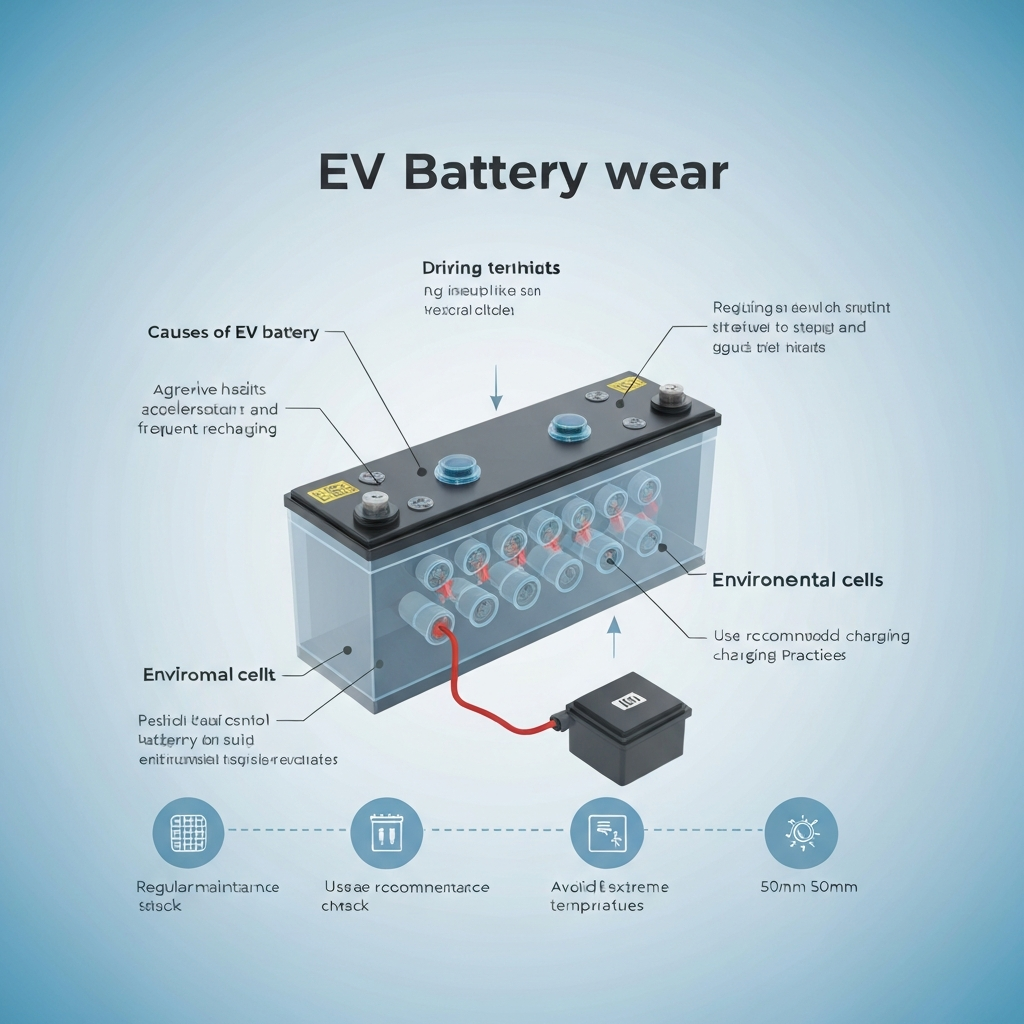
2. Key Factors Influencing Battery Degradation
Multiple elements contribute to the speed and extent of EV battery degradation. Recognizing and managing these factors is critical for maintaining optimal battery health and extending its lifespan. These factors can be broadly categorized into usage patterns, environmental conditions, and inherent battery characteristics.
- Charging Habits: Charging patterns have a significant impact on battery degradation. Regularly charging to 100% and frequently depleting the battery to very low levels (below 20%) puts undue stress on the battery cells, accelerating degradation. Fast charging, while convenient, also generates more heat, which can negatively impact long-term battery health. Conversely, adopting a more moderate charging strategy, such as charging to 80% most of the time and avoiding extreme discharge levels, can significantly prolong battery lifespan. Aiming for a charging range of 20%-80% for daily use is a generally recommended practice to minimize stress on the battery.
- Environmental Conditions: Extreme temperatures, both hot and cold, are detrimental to EV battery health. High temperatures accelerate chemical reactions within the battery, leading to faster degradation. Cold temperatures, on the other hand, reduce the battery's capacity and charging efficiency. Parking your EV in shaded areas during hot weather and garaging it during cold snaps can help mitigate these effects. Many modern EVs also incorporate thermal management systems that actively regulate battery temperature, but minimizing exposure to extreme ambient temperatures is still beneficial. Consider using pre-conditioning features to warm up the battery before driving in cold weather, improving both performance and efficiency.
- Driving Style and Usage: Aggressive driving habits, such as frequent hard acceleration and braking, can put a strain on the battery and contribute to faster degradation. These driving patterns demand high power output from the battery, generating heat and increasing stress on the cells. More gradual acceleration and regenerative braking techniques can help conserve energy and reduce the load on the battery. Similarly, consistently towing heavy loads or driving at high speeds can also accelerate degradation due to the increased energy demand. Consider these factors when planning trips and adjust your driving style accordingly to minimize stress on the battery.
3. Strategies for Mitigating Battery Degradation
Pro Tip: Utilize your EV's built-in battery management system! Most modern EVs offer features like scheduled charging, charge limiting, and pre-conditioning, all designed to optimize battery health. Familiarize yourself with these settings and tailor them to your specific driving needs and environmental conditions.
Mitigating EV battery degradation involves implementing a combination of best practices related to charging, driving, and environmental management. By adopting a proactive approach, EV owners can significantly extend the lifespan of their battery and maintain optimal performance for years to come. These strategies are designed to minimize stress on the battery, reduce heat generation, and promote a more stable operating environment.
One of the most effective strategies is to optimize your charging habits. Avoid consistently charging to 100% and try to keep the battery within a 20%-80% range for daily use. Use scheduled charging to take advantage of off-peak electricity rates and reduce the amount of time the battery spends at full charge. When possible, opt for Level 2 charging instead of frequent DC fast charging, as fast charging generates more heat. Furthermore, consider installing residential solar panels in conjunction with your EV charger. This allows you to charge your EV using clean, renewable energy, reducing your carbon footprint and potentially saving money on electricity bills. A solar panel installation can also provide a backup power source during outages, ensuring that your EV remains charged and ready to go.
Another crucial aspect is to adopt a more conservative driving style. Avoid frequent hard acceleration and braking, and utilize regenerative braking whenever possible. When possible avoid consistently towing heavy loads, as this puts a considerable strain on the battery. By implementing these strategies, you can significantly reduce the rate of battery degradation and maximize the lifespan of your EV. Furthermore, these practices also contribute to improved energy efficiency, resulting in lower electricity costs and a reduced environmental impact.
Conclusion
EV battery degradation is a natural process, but its rate can be significantly influenced by various factors, many of which are within the EV owner's control. By understanding the key drivers of degradation and implementing the strategies outlined in this guide, you can proactively protect your battery and extend its lifespan. This includes optimizing your charging habits, managing environmental factors, and adopting a more conservative driving style. Ultimately, these efforts translate to improved vehicle performance, reduced operating costs, and increased resale value.
The future of EV battery technology is bright, with ongoing research and development focused on improving battery chemistry, thermal management systems, and overall durability. As technology advances, we can expect to see even more robust and long-lasting EV batteries. In the meantime, by taking proactive steps to mitigate degradation, EV owners can ensure that their vehicles continue to perform optimally for many years to come. Embrace these strategies, and you'll be well-equipped to enjoy the benefits of electric driving while maximizing the lifespan of your valuable EV battery.
❓ Frequently Asked Questions (FAQ)
How much battery degradation is normal for an EV?
The amount of battery degradation considered normal can vary depending on the EV model, battery chemistry, and driving conditions. However, a general rule of thumb is to expect around 2-3% degradation per year for the first few years, which gradually slows down over time. Some EVs exhibit even lower degradation rates, particularly those with advanced thermal management systems and LFP batteries. It's important to consult your vehicle's warranty information and monitor your battery's performance over time to assess whether the degradation rate falls within the expected range.
Will fast charging significantly damage my EV battery?
While occasional fast charging is generally safe and convenient, frequent and consistent use of DC fast charging can accelerate battery degradation. Fast charging generates more heat compared to Level 2 charging, which can put stress on the battery cells over time. If possible, limit your use of fast charging to situations where it's truly necessary, such as during long road trips. For daily charging, opt for Level 2 charging at home or at public charging stations, as it's gentler on the battery and helps prolong its lifespan. The heat generated during fast charging is the primary cause of the increased wear and tear.
Does the type of battery chemistry affect degradation rates?
Yes, the battery chemistry plays a significant role in determining the rate of degradation. Lithium Iron Phosphate (LFP) batteries are generally considered more durable and resistant to degradation compared to Nickel Manganese Cobalt (NMC) batteries. LFP batteries offer a longer cycle life and are less susceptible to thermal runaway. However, they typically have a lower energy density compared to NMC batteries, resulting in a slightly shorter range for the same battery pack size. NMC batteries offer a better balance of energy density and performance, but they may degrade slightly faster under similar usage conditions. The choice of battery chemistry depends on the specific requirements of the EV and the manufacturer's priorities.
Tags: #EVBattery #BatteryDegradation #ElectricVehicles #EVCharging #SolarPanels #RenewableEnergy #BatteryHealth