📖 5 min read
Electric vehicles (EVs) are rapidly gaining popularity as a sustainable alternative to traditional gasoline-powered cars. A key component of any EV is its battery, which powers the vehicle and determines its range. However, like all batteries, EV batteries degrade over time, leading to reduced range and performance. Understanding the factors that influence battery degradation is essential for EV owners to optimize their battery life and maximize the value of their investment. This article delves into the primary causes of EV battery degradation, providing insights into how you can mitigate these effects and extend the life of your EV's battery pack. By understanding these factors, EV owners can make informed decisions regarding charging habits, driving behavior, and battery care, ultimately leading to a more enjoyable and cost-effective EV ownership experience. We’ll explore the science behind degradation and provide practical tips that any EV owner can implement today.
1. Understanding Battery Chemistry and Degradation
The heart of an EV's performance lies in its battery chemistry. Most EVs utilize lithium-ion batteries, known for their high energy density and relatively long lifespan. However, the chemical reactions that enable these batteries to store and release energy also contribute to their gradual degradation. This degradation manifests as a reduction in the battery's capacity (the amount of energy it can store) and an increase in its internal resistance (which affects its ability to deliver power). Factors such as temperature, state of charge, and charging habits significantly influence the rate of these chemical reactions.
Several processes contribute to lithium-ion battery degradation. One major factor is the formation of a solid electrolyte interphase (SEI) layer on the anode. This layer initially protects the electrode but grows over time, increasing resistance and consuming lithium ions, thereby reducing capacity. Another factor is lithium plating, where metallic lithium deposits on the anode surface during charging, particularly at low temperatures or high charging rates. This not only reduces capacity but can also lead to safety issues. Furthermore, cathode degradation can occur due to structural changes in the cathode material, leading to a loss of active material and reduced performance. Examples of such changes include particle cracking and transition metal dissolution.
The practical implications of battery chemistry and degradation are significant for EV owners. Understanding that high temperatures and extreme charging behaviors accelerate degradation allows owners to adopt practices that minimize these effects. For instance, avoiding frequent fast charging, especially to 100% state of charge, can help reduce lithium plating and SEI layer growth. Similarly, parking in shaded areas or using climate control features to pre-condition the battery can mitigate the impact of extreme temperatures. By being mindful of these factors and adjusting their driving and charging habits accordingly, EV owners can significantly extend the life of their battery and maintain optimal performance.
2. Key Factors Affecting EV Battery Lifespan
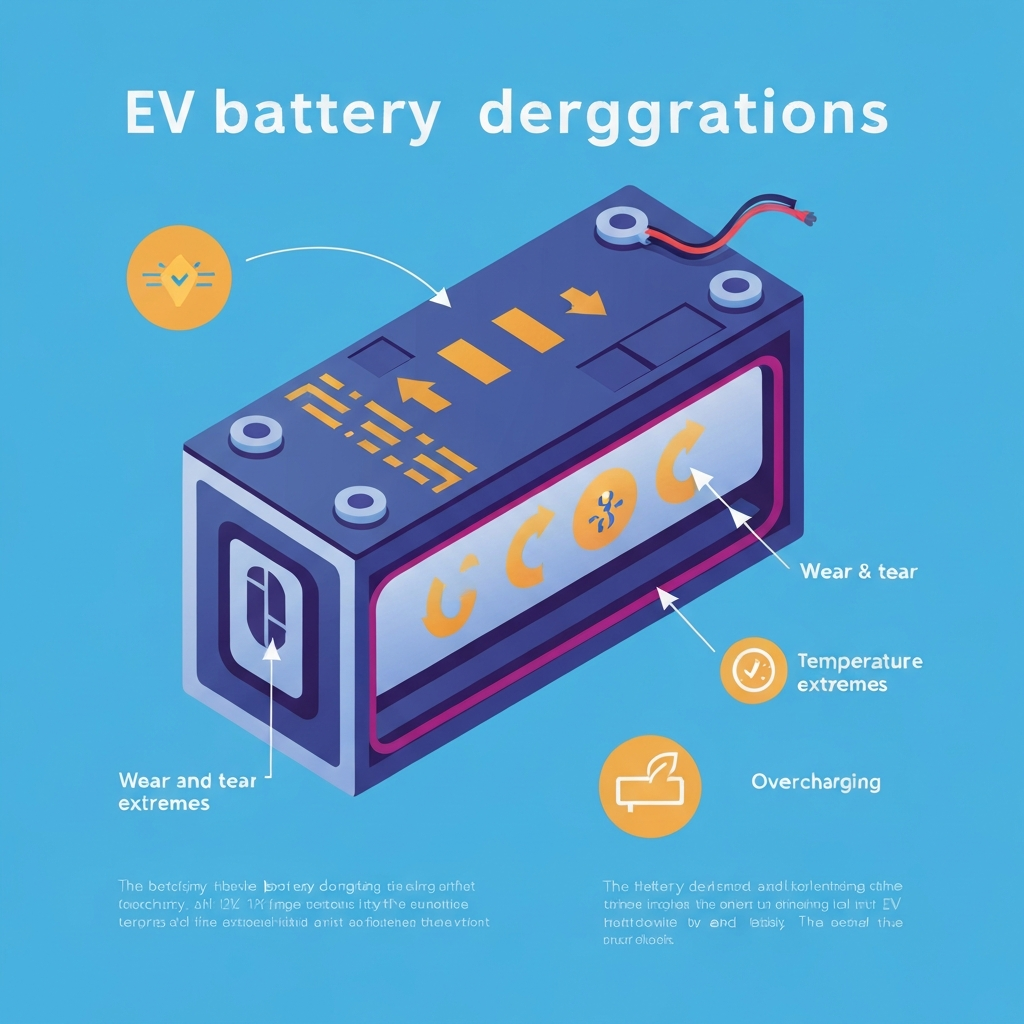
Several key factors contribute to the degradation of EV batteries. These factors can be broadly categorized into temperature, state of charge (SOC), charging habits, and driving patterns. Understanding how each of these factors affects battery health is crucial for EV owners to maximize the lifespan of their battery.
- Temperature: Extreme temperatures, both high and low, significantly impact battery performance and lifespan. High temperatures accelerate chemical reactions within the battery, leading to faster degradation of the electrodes and electrolyte. Low temperatures, on the other hand, reduce the battery's ability to deliver power and can promote lithium plating during charging. Maintaining the battery within its optimal temperature range is essential for longevity. For instance, parking an EV in direct sunlight during a hot summer day can cause the battery temperature to rise dramatically, accelerating degradation.
- State of Charge (SOC): The state of charge refers to the amount of energy stored in the battery relative to its total capacity. Regularly charging the battery to 100% or depleting it to 0% can accelerate degradation. Maintaining the battery within a moderate SOC range, typically between 20% and 80%, can help minimize stress on the battery cells and extend its lifespan. Some EVs even offer settings that allow users to limit the maximum charge level to 80% to optimize battery health. For example, consistently charging to 100% can cause increased stress on the battery chemistry, leading to faster capacity loss over time.
- Charging Habits: Charging habits play a crucial role in battery degradation. Frequent fast charging, while convenient, can generate significant heat and stress within the battery, accelerating degradation. Slower charging methods, such as Level 1 or Level 2 charging, are generally gentler on the battery and can help prolong its lifespan. Furthermore, leaving the EV plugged in for extended periods after it has reached full charge can also contribute to degradation. Using a timer or smart charger to control charging times can help mitigate this effect. For instance, relying exclusively on DC fast charging can shorten the battery lifespan compared to primarily using Level 2 charging at home.
3. Practical Strategies for Mitigating Battery Degradation
Pro Tip: Consider using a regenerative braking system effectively. It helps recoup energy and reduces wear and tear on your braking system, indirectly benefiting your battery by reducing overall energy consumption and demand during driving.
Minimizing EV battery degradation involves adopting a combination of driving and charging habits that reduce stress on the battery. This includes being mindful of temperature extremes, managing the state of charge, and optimizing charging practices. By implementing these strategies, EV owners can significantly extend the life of their battery and maintain optimal performance for a longer period.
One effective strategy is to avoid extreme temperatures. Parking in shaded areas during hot weather or using a garage in cold weather can help maintain the battery within its optimal temperature range. Additionally, pre-conditioning the battery before driving can help regulate its temperature and improve performance. Pre-conditioning involves using the EV's climate control system while the vehicle is plugged in to warm or cool the battery to its ideal operating temperature. Many modern EVs offer automated pre-conditioning features that can be scheduled via the vehicle's infotainment system or mobile app. Proper thermal management is crucial for preserving battery health.
Optimizing charging habits is another key aspect of mitigating battery degradation. Whenever possible, use Level 2 charging instead of frequent DC fast charging. Level 2 charging is gentler on the battery and generates less heat. Also, avoid consistently charging to 100% or depleting the battery to 0%. Aim to keep the state of charge between 20% and 80% for daily use. If a longer trip requires charging to 100%, do so shortly before departure rather than leaving the battery at full charge for an extended period. Furthermore, consider using a smart charger that allows you to schedule charging times and monitor battery health. By adopting these charging practices, you can minimize stress on the battery and prolong its lifespan. These strategies, combined with responsible driving habits, will keep your EV running efficiently for years to come.
Conclusion
Understanding and mitigating EV battery degradation is crucial for maximizing the value and lifespan of your electric vehicle. By being mindful of the factors that contribute to degradation, such as temperature extremes, state of charge, and charging habits, EV owners can take proactive steps to protect their battery and maintain optimal performance. Implementing practical strategies, such as avoiding frequent fast charging, maintaining a moderate state of charge, and managing temperature exposure, can significantly extend the life of the battery and reduce the need for costly replacements. Ultimately, a well-cared-for battery translates to a more reliable and enjoyable EV ownership experience.
As technology advances, we can expect further improvements in battery chemistry and management systems that will enhance battery lifespan and reduce degradation rates. Solid-state batteries, for example, promise higher energy density, improved safety, and longer lifespans compared to current lithium-ion technology. Furthermore, advanced battery management systems (BMS) are continuously being developed to optimize charging and discharging cycles, monitor battery health, and provide real-time feedback to drivers. These advancements will further mitigate battery degradation and make EVs an even more compelling choice for environmentally conscious consumers. The future of EV batteries is bright, with ongoing research and innovation paving the way for longer-lasting, more efficient, and more sustainable electric vehicles.
❓ Frequently Asked Questions (FAQ)
How much range can I expect to lose over the lifespan of my EV battery?
The amount of range you can expect to lose over the lifespan of your EV battery varies depending on several factors, including the specific battery chemistry, driving habits, and environmental conditions. Generally, most EV batteries are expected to retain around 80% of their original capacity after 8-10 years of use or 100,000-150,000 miles. This means that if your EV originally had a range of 300 miles, you might expect to see a reduction to around 240 miles after a decade. However, with proper care and responsible driving habits, you can minimize range loss and extend the life of your battery.
What are the signs that my EV battery is degrading?
Several signs can indicate that your EV battery is degrading. The most obvious sign is a noticeable reduction in range. If you find that you can no longer drive as far on a full charge as you used to, it's a strong indication that your battery's capacity has decreased. Another sign is a decrease in performance, such as slower acceleration or reduced top speed. You might also notice that the battery charges more quickly or discharges more rapidly than it used to. Some EVs have built-in diagnostic tools that can provide more detailed information about battery health. If you suspect that your battery is degrading, it's a good idea to consult with a qualified EV technician to have it assessed.
Will solar panels and home charging affect my EV battery's degradation?
Using solar panels to power your home and charge your EV can have a positive impact on battery degradation, especially if coupled with smart charging practices. By using solar energy, you're likely charging your EV at a slower rate (Level 2 charging), which is generally gentler on the battery compared to frequent DC fast charging. This can help to minimize heat generation and stress on the battery cells, potentially prolonging its lifespan. Additionally, if you use a smart charger with your solar panel system, you can optimize charging times to coincide with peak solar production, reducing your reliance on the grid and further minimizing battery degradation.
Tags: #EVBattery #BatteryDegradation #ElectricVehicles #EVCharging #SolarPanels #GreenEnergy #BatteryLife
🔗 Recommended Reading
- The Ultimate AI Books for Beginners Guide Your First Steps into Artificial Intelligence
- Containerizing AI Applications Enterprise Grade Deployment Strategies
- Corporate Process Standardization Templates Driving Efficiency and Consistency
- AI Hardware for Deep Learning Accelerating the Future
- Advanced Solar Charging Enhancing EV Battery Health Through Smart Photovoltaics