📖 5 min read
Food waste represents a significant portion of the trash ending up in landfills, contributing to greenhouse gas emissions and environmental pollution. Composting food scraps at home offers a practical and effective solution to drastically reduce your household waste while simultaneously creating nutrient-rich soil for your garden. By diverting food scraps from landfills, you're not only minimizing your environmental impact but also creating a valuable resource. This guide provides a comprehensive overview of composting food scraps at home, equipping you with the knowledge and steps to get started, troubleshoot common issues, and reap the rewards of a more sustainable lifestyle. Let's delve into the world of composting and unlock its potential to transform your kitchen waste into garden gold.
1. Understanding the Basics of Home Composting
Composting is a natural biological process that decomposes organic matter into a nutrient-rich substance called humus or compost. This process relies on microorganisms, such as bacteria and fungi, to break down food scraps, yard waste, and other organic materials. The key to successful composting lies in maintaining the right balance of ingredients, moisture, and aeration. A well-managed compost pile provides an ideal environment for these microorganisms to thrive, accelerating decomposition and producing high-quality compost.
There are two primary types of composting: aerobic and anaerobic. Aerobic composting, which is the focus of this guide, requires oxygen and produces compost relatively quickly with minimal odors. Anaerobic composting, on the other hand, occurs in the absence of oxygen and can produce unpleasant smells if not managed correctly. For home composting, aerobic methods are generally preferred due to their ease of management and faster results. Understanding the differences between these methods is crucial for choosing the right approach for your specific needs and circumstances.
Successful composting requires a balance of "greens" (nitrogen-rich materials) and "browns" (carbon-rich materials). Greens include food scraps like fruit and vegetable peels, coffee grounds, and grass clippings. Browns include dried leaves, twigs, cardboard, and paper. A good ratio is approximately two parts browns to one part greens. Maintaining this balance provides the necessary nutrients for the microorganisms to flourish and effectively break down the organic matter, ultimately leading to a rich and usable compost for your gardening endeavors.
2. Setting Up Your Home Composting System
Choosing the right composting method and location is crucial for successful composting. Several options are available, each with its own advantages and disadvantages. Consider your space, climate, and the amount of food waste you generate when making your decision. This will help you select a system that aligns with your lifestyle and maximizes your composting efficiency.
- Compost Bin: Compost bins are enclosed containers that provide a controlled environment for decomposition. They are suitable for smaller spaces and help contain odors and pests. Various types are available, including tumblers (which make turning the compost easier), stationary bins, and multi-compartment systems. Choose a bin that fits your space constraints and composting needs. Regular turning is essential to ensure proper aeration.
- Compost Tumbler: Compost tumblers are rotating drums that make turning the compost pile significantly easier, accelerating the decomposition process. They are typically more expensive than stationary bins but offer greater convenience and efficiency. The enclosed design also helps retain moisture and heat, further promoting faster decomposition. However, they can sometimes be more difficult to initially load with compost ingredients.
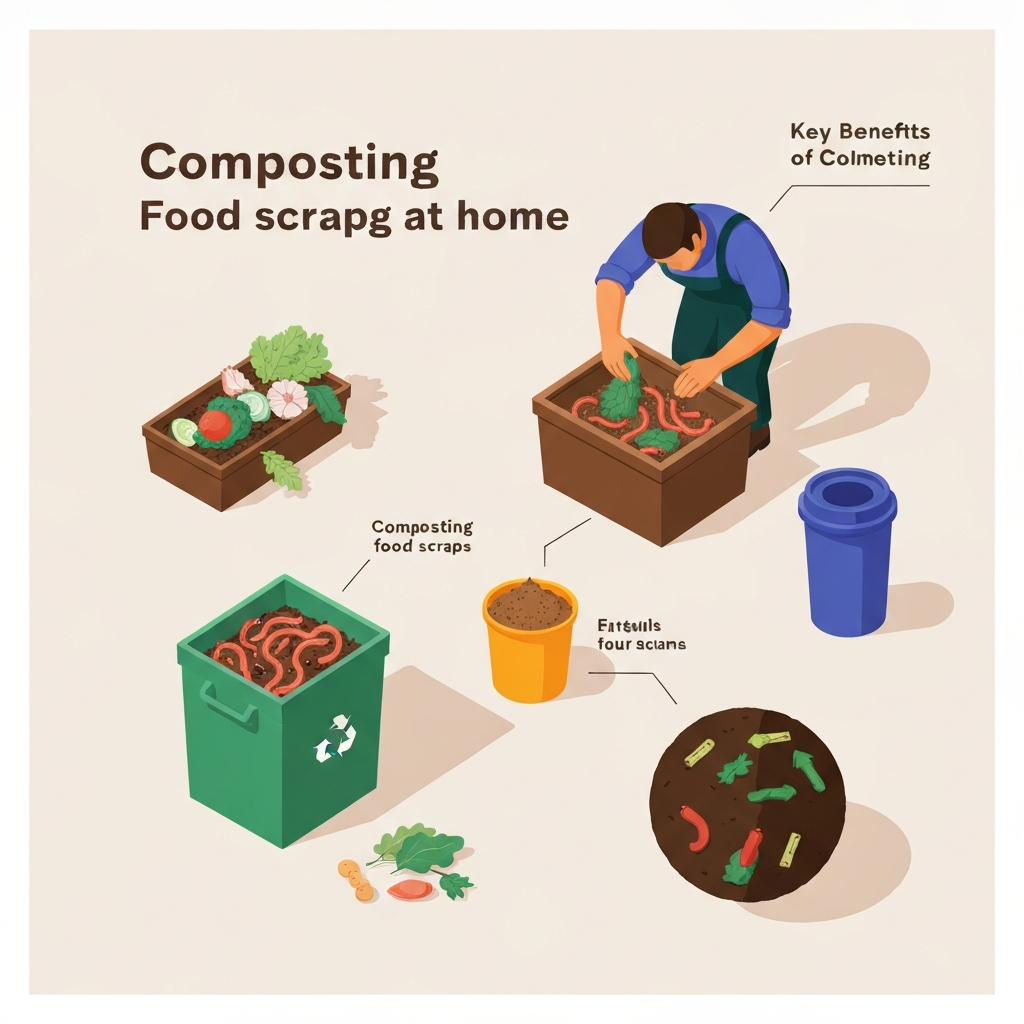
- Vermicomposting (Worm Composting): Vermicomposting utilizes worms to break down food scraps, creating nutrient-rich castings. This method is ideal for indoor composting and is well-suited for apartment dwellers or those with limited outdoor space. Red wiggler worms are commonly used for vermicomposting. It requires a special bin and careful management of moisture and temperature to keep the worms healthy and productive.
3. Best Practices for Composting Food Scraps
Pro Tip: Chop food scraps into smaller pieces to speed up the decomposition process. Smaller pieces provide a larger surface area for microorganisms to work on, resulting in faster and more efficient composting.
To ensure successful composting, avoid composting meat, dairy products, oily foods, and pet waste, as these materials can attract pests and create unpleasant odors. Focus on composting fruits, vegetables, coffee grounds, tea bags, and bread. Regularly turn or aerate your compost pile to maintain proper oxygen levels. This helps prevent anaerobic conditions, which can lead to foul smells and slower decomposition rates. Consider using a compost aerator tool or simply turning the pile with a pitchfork or shovel.
Maintaining the correct moisture level is crucial for successful composting. The compost pile should be moist like a wrung-out sponge. If it's too dry, the decomposition process will slow down. If it's too wet, the pile can become anaerobic and smelly. Add water as needed to maintain the ideal moisture level. In dry climates, you may need to water the compost pile more frequently. In wetter climates, ensure proper drainage to prevent the pile from becoming waterlogged.
Composting is a continuous process that requires patience and attention. Monitor your compost pile regularly and make adjustments as needed to maintain the right balance of ingredients, moisture, and aeration. Over time, you'll develop a better understanding of your composting system and how to optimize it for your specific conditions. The end result is a valuable soil amendment that can enrich your garden and reduce your reliance on synthetic fertilizers, contributing to a healthier and more sustainable environment.
Conclusion
Composting food scraps at home is a simple yet powerful way to reduce waste, improve soil health, and contribute to a more sustainable lifestyle. By understanding the basics of composting, setting up the right system, and following best practices, you can transform your kitchen waste into a valuable resource for your garden. Embracing this eco-friendly practice not only reduces your environmental footprint but also connects you more closely with the natural world.
As more individuals and communities embrace composting, the demand for efficient and innovative composting solutions is likely to grow. Future trends may include advancements in composting technology, such as automated composting systems and improved composting bins, as well as increased community composting initiatives. By staying informed and engaged, you can continue to refine your composting practices and maximize their environmental benefits.
❓ Frequently Asked Questions (FAQ)
How long does it take to get usable compost?
The time it takes to produce usable compost varies depending on the composting method, the ingredients used, and the environmental conditions. Aerobic composting can typically produce compost in 3 to 6 months, while vermicomposting can yield compost in as little as 1 to 3 months. Factors such as temperature, moisture, and aeration can significantly impact the decomposition rate. Regular turning and maintaining the correct moisture level can help accelerate the process.
What do I do if my compost pile smells bad?
A smelly compost pile usually indicates an imbalance of ingredients or a lack of oxygen. The most common cause is too much nitrogen-rich material (greens) or too much moisture. To fix this, add more carbon-rich material (browns) such as dried leaves, shredded paper, or wood chips. Ensure the pile is properly aerated by turning it regularly. Avoid adding meat, dairy, or oily foods, as these can attract pests and cause odors. If the problem persists, consider relocating the compost pile to a more ventilated area.
How do I know when the compost is ready to use?
Finished compost will be dark brown and crumbly, with an earthy smell. It should no longer resemble the original ingredients. The volume of the compost will also have reduced significantly. A simple test is to try to identify the original food scraps; if you can't easily distinguish them, the compost is likely ready. You can also test the compost's pH level; it should be neutral or slightly acidic. When added to your garden, the compost should enrich the soil, providing essential nutrients for plant growth.
Tags: #Composting #FoodWaste #ZeroWaste #SustainableLiving #Gardening #EcoFriendly #ReduceReuseRecycle