📖 5 min read
Imagine a classroom where every student receives a learning experience tailored precisely to their individual needs, pace, and learning style. This vision is rapidly becoming a reality, thanks to the transformative power of artificial intelligence (AI) in education. AI is not just about replacing teachers; it's about augmenting their abilities and providing students with personalized pathways to success. From intelligent tutoring systems to AI-powered content creation, the possibilities for AI in education are vast and continue to expand, promising a future where every student can thrive. This technology holds the promise to address achievement gaps, cater to diverse learning needs, and ultimately, create a more equitable and effective education system for all. The integration of AI represents a paradigm shift, moving away from one-size-fits-all approaches towards a more dynamic and responsive learning environment.
1. The Core Principles of AI-Driven Personalization
At its heart, AI-driven personalization in education revolves around using data to understand each student's unique learning profile. This involves analyzing various data points, including past performance, learning styles, strengths, and weaknesses, to create a customized learning path. AI algorithms can identify areas where a student is struggling and provide targeted support, while also accelerating their progress in areas where they excel. This level of individualization was previously impossible to achieve on a large scale, but AI makes it feasible and affordable.
Consider an AI-powered math tutor that adapts to a student's skill level in real-time. If the student struggles with a particular concept, the tutor provides additional explanations, examples, and practice problems until the student demonstrates mastery. Conversely, if the student grasps a concept quickly, the tutor can move on to more advanced material, preventing boredom and maximizing engagement. This adaptive learning approach ensures that students are constantly challenged but not overwhelmed, leading to improved learning outcomes and a more positive learning experience.
The practical implications of AI-driven personalization are far-reaching. It can help bridge achievement gaps by providing targeted support to students who are struggling, regardless of their background or learning challenges. It can also empower gifted students to reach their full potential by providing them with advanced learning opportunities that are tailored to their specific interests and abilities. Furthermore, AI can free up teachers' time, allowing them to focus on providing individualized attention and support to students who need it most.
2. Key Applications of AI in Education
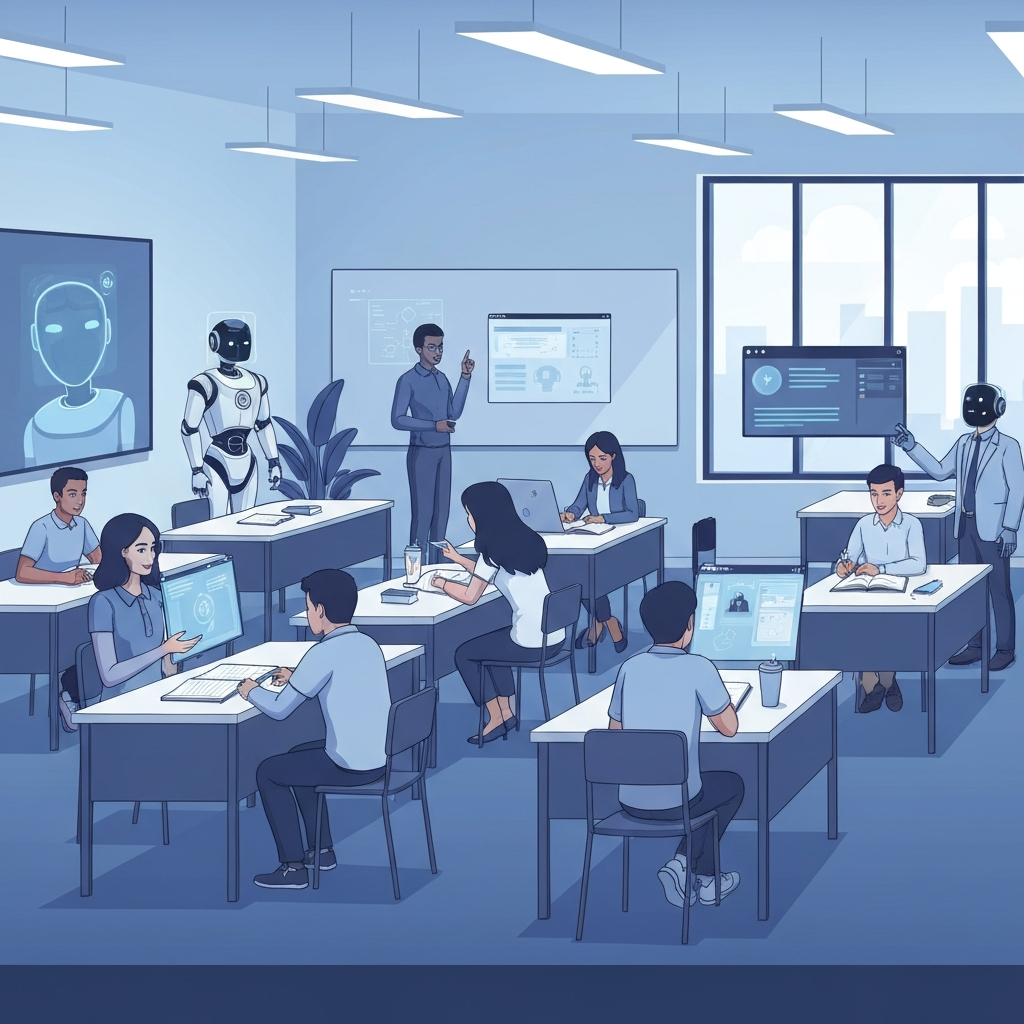
AI's impact on education is multifaceted, manifesting in a variety of applications that enhance different aspects of the learning process. These applications range from automated grading and feedback systems to intelligent tutoring systems and personalized content creation tools, each contributing to a more efficient, effective, and engaging learning environment. By automating routine tasks and providing personalized support, AI empowers both teachers and students to achieve better outcomes.
- Intelligent Tutoring Systems (ITS): ITS provides personalized guidance and support to students, adapting to their individual learning styles and pace. These systems can identify areas where a student is struggling and provide targeted interventions, offering customized exercises and explanations to help them master the material. Unlike traditional tutoring, ITS is available 24/7, providing students with on-demand support whenever they need it. For instance, a student struggling with algebra can use an ITS to receive step-by-step guidance on solving equations, complete with personalized feedback and hints.
- Automated Grading and Feedback: AI-powered grading systems can automatically assess student work, providing instant feedback on assignments and exams. This not only saves teachers time and effort but also allows students to receive timely feedback, enabling them to identify areas for improvement more quickly. These systems can analyze essays, code, and other types of student work, providing detailed feedback on grammar, style, and content. The automated feedback allows students to understand their errors and improve their skills effectively.
- Personalized Content Creation: AI can be used to create personalized learning materials, such as textbooks, videos, and interactive simulations, that are tailored to individual student needs. This ensures that students are learning from content that is relevant to their interests and learning styles, increasing engagement and improving learning outcomes. An example would be creating a virtual field trip experience based on a student's expressed interest in ancient Egypt, complete with interactive elements and personalized quizzes.
3. Overcoming Challenges and Ensuring Ethical Implementation
Data privacy and algorithmic bias are crucial ethical considerations when implementing AI in education. Prioritize transparency and data security to build trust and ensure fair outcomes for all students.
While the potential benefits of AI in personalized education are significant, it's crucial to address the challenges associated with its implementation. These challenges include data privacy concerns, algorithmic bias, and the need for adequate teacher training. Addressing these issues proactively is essential to ensure that AI is used ethically and effectively in education.
One of the key challenges is ensuring data privacy. AI systems collect and analyze vast amounts of student data, so it's crucial to protect this data from unauthorized access and misuse. Schools and educational institutions must implement robust data security measures and adhere to strict privacy policies. Furthermore, it's important to be transparent with students and parents about how their data is being used and to obtain their informed consent.
Algorithmic bias is another critical concern. AI algorithms are trained on data, and if that data reflects existing biases, the algorithms may perpetuate those biases. For example, if an AI system is trained on data that overrepresents certain demographic groups, it may make biased recommendations that disadvantage other groups. To mitigate this risk, it's important to carefully vet the data used to train AI algorithms and to regularly monitor the algorithms for bias. Addressing these challenges head-on is essential to unlock the full potential of AI while ensuring equitable outcomes for all learners.
🔗 Recommended Reading
Conclusion
AI for personalized education represents a monumental shift in how we approach learning, offering the potential to create more engaging, effective, and equitable educational experiences for all students. By leveraging the power of AI, educators can tailor instruction to individual needs, provide personalized support, and unlock every student's full potential. As AI technology continues to evolve, its role in education will only become more prominent, shaping the future of learning in profound ways.
Looking ahead, we can expect to see even more sophisticated AI applications in education, such as AI-powered virtual reality learning environments and AI-driven career counseling systems. However, it's crucial to approach the implementation of AI in education with caution and to address the ethical challenges proactively. By doing so, we can harness the power of AI to create a brighter future for education and empower all students to succeed.
❓ Frequently Asked Questions (FAQ)
How does AI personalize learning experiences for students?
AI personalizes learning by analyzing student data to understand their individual learning styles, strengths, and weaknesses. Based on this analysis, AI systems can create customized learning paths, provide targeted support, and recommend relevant learning resources. For example, an AI tutor might identify that a student struggles with visual learning and then provide more visual aids and interactive simulations to help them grasp the concepts. This adaptive approach ensures that students receive instruction that is tailored to their specific needs, leading to improved learning outcomes and increased engagement.
What are the ethical considerations when using AI in education?
Ethical considerations are paramount when implementing AI in education, primarily focusing on data privacy, algorithmic bias, and equitable access. Data privacy involves protecting student information from unauthorized access and misuse, which necessitates robust security measures and transparent data policies. Algorithmic bias refers to the potential for AI systems to perpetuate existing biases if trained on biased data, requiring careful data vetting and ongoing monitoring. Ensuring equitable access means that all students, regardless of their background or location, have equal opportunities to benefit from AI-powered learning tools, addressing the digital divide and ensuring fair outcomes for all learners.
Will AI replace teachers in the future?
The most likely scenario is that AI will augment and enhance the role of teachers, rather than replace them entirely. AI can automate routine tasks such as grading and administrative work, freeing up teachers' time to focus on providing individualized attention and support to students. Additionally, AI can provide teachers with valuable insights into student learning, enabling them to make more informed instructional decisions. The human element of teaching, including empathy, creativity, and critical thinking, remains irreplaceable, making the collaboration between teachers and AI a powerful force for improving education.
Tags: #AIinEducation #PersonalizedLearning #EdTech #ArtificialIntelligence #FutureofEducation #AI #EducationInnovation