📖 5 min read
The rise of artificial intelligence has permeated nearly every aspect of our lives, and the art world is no exception. AI-based art generation, once a futuristic concept, is now a tangible reality, empowering artists and enthusiasts alike to create stunning and unique pieces. This technology harnesses the power of machine learning algorithms to analyze vast datasets of existing artwork, learn artistic styles, and then generate original creations based on user input or autonomously. From photorealistic images to abstract compositions, AI art generators are pushing the boundaries of creativity and challenging traditional notions of artistic expression. This article delves into the mechanics, applications, and implications of AI-based art generation, offering a comprehensive guide to this burgeoning field.
1. Understanding AI Art Generation Techniques
At the heart of AI art generation lie several key techniques, primarily revolving around machine learning models. Generative Adversarial Networks (GANs) are a particularly popular method. GANs involve two neural networks: a generator that creates new images and a discriminator that evaluates their authenticity. These networks compete against each other, with the generator continually improving its output to fool the discriminator, resulting in increasingly realistic and compelling artwork. Another approach involves the use of Variational Autoencoders (VAEs), which learn a compressed representation of input data and then generate new samples from this representation.
Consider the example of generating realistic portraits using GANs. The generator is fed a random noise vector, which it transforms into an image. The discriminator then compares this generated image to a dataset of real portraits and provides feedback. This feedback loop allows the generator to refine its output over time, eventually producing portraits that are difficult to distinguish from real photographs. Datasets play a crucial role; the more comprehensive and diverse the dataset, the better the AI's ability to generate nuanced and original art. For instance, an AI trained solely on Renaissance paintings will likely produce art in that style, whereas an AI trained on a mix of modern and classical art will exhibit a broader range of styles.
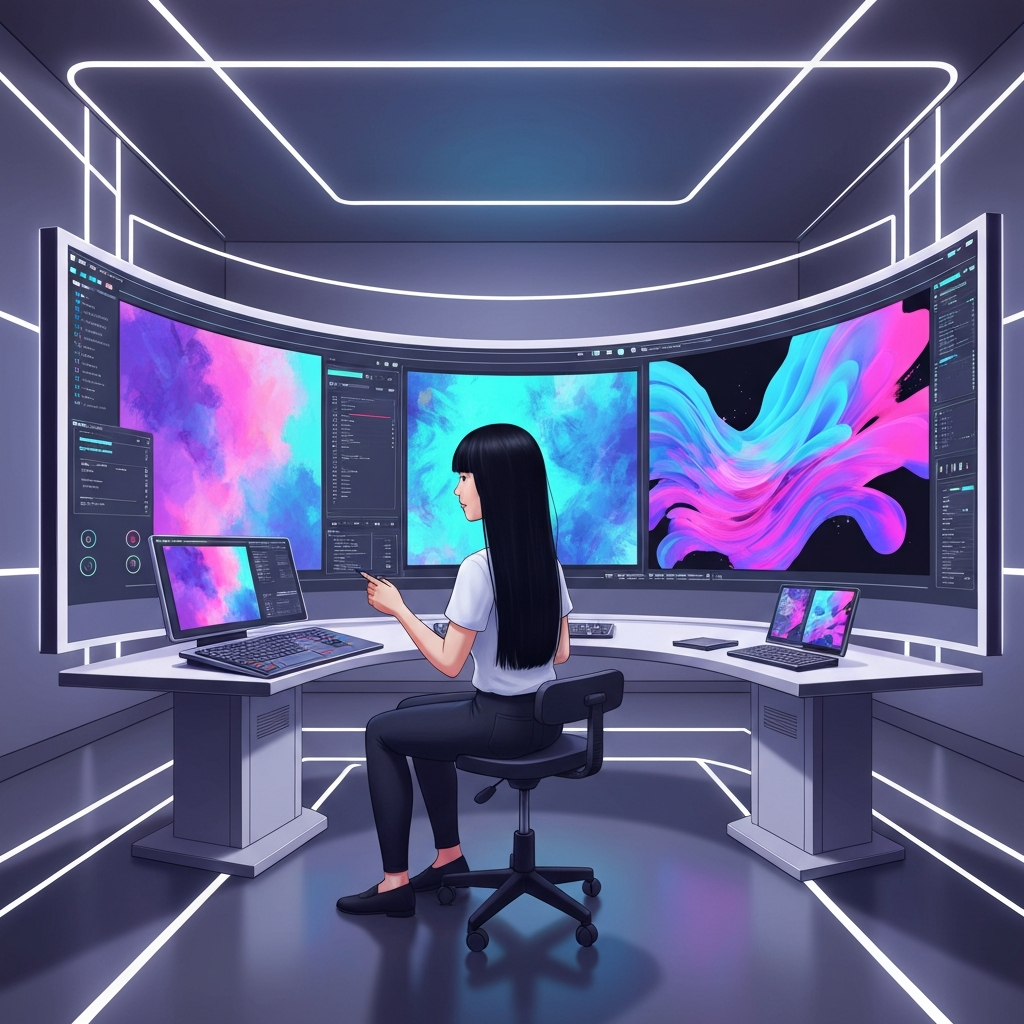
The practical implications of these techniques are vast. AI art generators can be used to create personalized artwork, design unique visual content for marketing campaigns, or even assist in the creation of video game assets. Architects can use AI to generate visualizations of building designs, while fashion designers can create new patterns and styles. The accessibility of these tools is also increasing, with many online platforms offering user-friendly interfaces for creating AI-generated art, making it easier for non-artists to experiment with this technology. Ultimately, AI art generation democratizes the artistic process, allowing anyone with an idea to bring it to life visually.
2. Applications and Impact on the Art World
AI art generation is not just a technological marvel; it's a disruptive force reshaping the landscape of art and creativity. Its applications span diverse fields, from entertainment to education and beyond. The impact on artists, designers, and consumers alike is profound, raising important questions about authorship, originality, and the very definition of art.
- Entertainment and Media: AI is being used to generate special effects, create concept art for films and video games, and even produce entire animated sequences. The efficiency and speed of AI tools allow studios to iterate on ideas faster and create visually stunning content with reduced costs. Imagine a film where entire landscapes and characters are generated by AI, blending seamlessly with real-world footage. This is already happening, blurring the lines between reality and digital creation.
- Design and Marketing: Businesses are leveraging AI to create personalized marketing materials, design unique product packaging, and generate visual content for social media campaigns. AI algorithms can analyze customer preferences and create designs that resonate with specific target audiences, leading to higher engagement and conversion rates. For example, an e-commerce company could use AI to automatically generate product images with different backgrounds and styles, tailoring the visuals to individual customer profiles.
- Education and Accessibility: AI art generation tools are becoming increasingly accessible to individuals with disabilities, allowing them to express their creativity in ways that were previously impossible. AI can translate text descriptions into visual art, enabling people with visual impairments to create and appreciate artwork. Furthermore, AI can be used to teach art principles and techniques, providing personalized feedback and guidance to aspiring artists.
3. Ethical Considerations and the Future of AI Art
The key to navigating the ethical landscape of AI art lies in transparency and responsible innovation. Understanding the limitations and biases of AI algorithms is crucial for ensuring fairness and avoiding unintended consequences.
As AI art generation becomes more sophisticated, it's crucial to address the ethical considerations that arise. One of the primary concerns is copyright and intellectual property. Who owns the copyright to an artwork generated by AI? Is it the programmer who created the algorithm, the user who provided the input, or the AI itself? These questions are still being debated in legal circles, and the answers will have significant implications for the future of AI art. Additionally, concerns arise about the potential for AI to be used to create deepfakes or spread misinformation through realistic-looking but fabricated images.
To mitigate these risks, it's essential to develop clear ethical guidelines and legal frameworks for AI art generation. This includes establishing rules for copyright ownership, implementing measures to prevent the creation of malicious content, and promoting transparency in the use of AI algorithms. Watermarking AI-generated art could help distinguish it from human-created art, fostering trust and preventing misuse. Education and awareness are also vital, helping users understand the capabilities and limitations of AI art and promoting responsible creation.
The future of AI art is bright, with endless possibilities for innovation and creativity. As AI algorithms continue to evolve, we can expect to see even more sophisticated and realistic artwork. AI will likely become an increasingly integral tool for artists, designers, and creators across various fields, augmenting human creativity and pushing the boundaries of artistic expression. However, it's crucial to approach this technology with caution and responsibility, ensuring that it's used ethically and for the benefit of society.
Conclusion
AI-based art generation is rapidly transforming the art world, offering new tools and opportunities for creativity. By understanding the techniques, applications, and ethical considerations surrounding AI art, we can harness its potential to enhance artistic expression and innovation. This technology democratizes art creation, making it more accessible and empowering individuals to explore their creativity in novel ways. However, it is imperative to address the ethical challenges and establish clear guidelines to ensure responsible and beneficial use.
The future of AI art is likely to involve even closer collaboration between humans and machines, with AI serving as a powerful tool to augment human creativity. We can anticipate the emergence of new artistic styles and forms that are uniquely enabled by AI, pushing the boundaries of what is considered art. Ultimately, the success of AI art generation hinges on our ability to navigate the ethical landscape and embrace its potential for good, ensuring that it serves as a force for creativity, innovation, and social benefit.
❓ Frequently Asked Questions (FAQ)
Can AI-generated art be copyrighted?
The issue of copyright for AI-generated art is complex and still evolving in legal terms. Currently, copyright law generally requires human authorship. If an AI creates a work autonomously without significant human input, it may not be eligible for copyright protection in many jurisdictions. However, if a human provides significant creative input in prompting, selecting, or editing the AI-generated output, the human may be able to claim copyright over the final result, but the specifics are subject to ongoing debate and legal interpretation.
How does AI art generation differ from traditional art forms?
AI art generation differs significantly from traditional art forms in its creation process. Traditional art relies on human skill, creativity, and emotional expression, while AI art generation leverages algorithms and machine learning models. AI algorithms analyze vast datasets of existing artwork to learn patterns and styles, and then generate new creations based on those patterns. While human artists often draw inspiration from their own experiences and emotions, AI algorithms operate based on mathematical and statistical principles, potentially leading to different styles and approaches to art creation.
What are the limitations of AI art generation?
Despite its rapid advancements, AI art generation still faces several limitations. One key limitation is the dependence on training data; the AI's output is only as good as the data it's trained on, which can lead to biases and lack of originality if the dataset is limited or skewed. Additionally, AI often struggles with abstract concepts, complex emotions, and nuanced storytelling, which are hallmarks of human artistic expression. While AI can generate technically impressive images, it may lack the depth, emotional resonance, and personal connection that characterize human-created art.
Tags: #AIArt #ArtGeneration #ArtificialIntelligence #MachineLearning #DigitalArt #CreativeAI #TechArt